1. Comprehensive Technical Specifications: Helical Gear Reducer Series
| Parameter Description | Specification Data |
|---|---|
| Nominal Output Torque (Nm) | 180 – 15,000 Nm |
| Gear Ratio Range (i) | 3.7:1 to 280:1 (Up to 15,000:1 with compound units) |
| Mechanical Efficiency (%) | 94% – 97% per stage |
| Input Shaft Speed (RPM) | 750, 1000, 1500 (Standard) |
| Output Shaft Diameter (mm) | 25mm – 120mm (Solid/Hollow options) |
| Housing Material | High-grade Ductile Iron (QT450-10) |
| Gear Material | 20CrMnTi Alloy Steel (Case-hardened) |
| Surface Hardness (HRC) | 58 – 62 HRC |
| Protection Rating (IP) | IP55 / IP65 (Aquaculture specialized) |
| Lubrication Type | ISO VG 220 Synthetic Gear Oil (Food Grade available) |
| Ambient Operating Temp (°C) | -30°C to +50°C (Ukraine winter-ready) |
| Backlash (arcmin) | ≤ 10 – 15 arcmin |
| Mounting Orientation | Horizontal, Vertical, Universal Flange |
| Noise Emission (dB) | ≤ 65 dB at 1m distance |
| Vibration Threshold (mm/s) | ≤ 2.8 mm/s |
| Radial Load Capacity (N) | Up to 25,000 N (depending on model) |
| Axial Load Capacity (N) | Up to 12,000 N |
| Bearing Type | NSK / SKF Tapered Roller Bearings |
| Oil Seal Type | Double-lip Viton Seals |
| Thermal Power Rating (kW) | 1.5 kW – 45 kW |
| Paint Coating | Anti-corrosive Epoxy Resin (C4/C5 Marine Grade) |
| Service Factor (fB) | 1.25 to 2.5 (High shock absorption) |
| Weight (kg) | 18 kg – 350 kg |
| Fatigue Life (L10h) | > 25,000 hours |
| Input Flange Standard | IEC / NEMA / Servo Adaptable |
2. Driving the Future of Ukrainian Fish Farming: The Role of Helical Gear Reducers
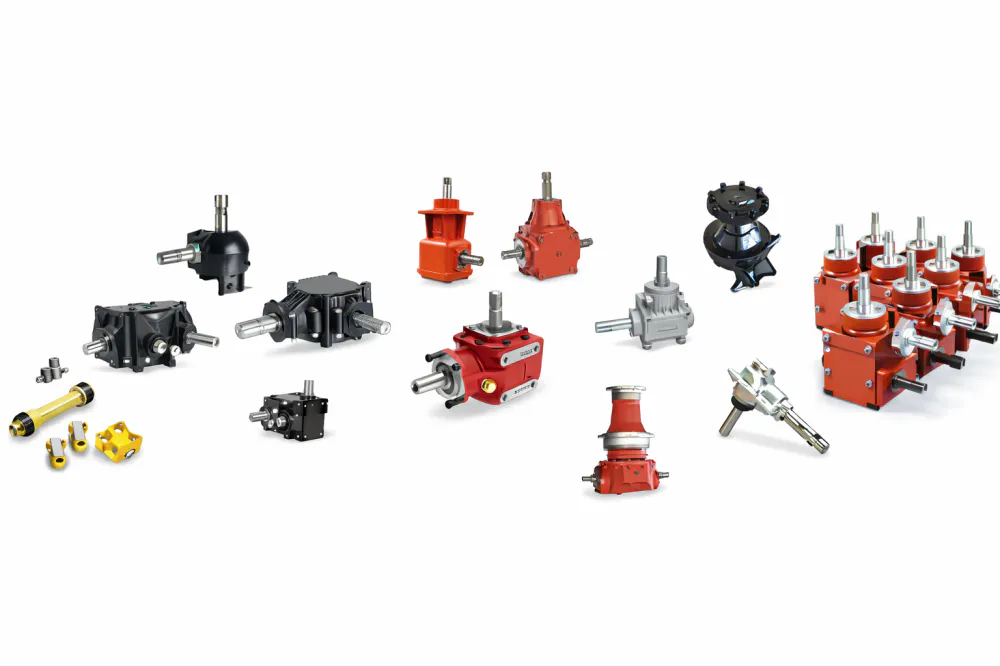
In the rapidly evolving landscape of Ukraine’s agricultural sector, the integration of automated chain feeding systems in aquaculture has become a cornerstone for operational efficiency. The Helical Gear Reducer serves as the mechanical heartbeat of these systems, converting high-speed motor rotation into the steady, high-torque movement required to transport feed across hundreds of meters of pond or tank infrastructure. Unlike traditional worm gears, the helical gear reducer offers significantly higher mechanical efficiency, which is critical in a country where energy costs are a major factor in farm profitability.
Whether it is a carp farm in the Poltava region or a sturgeon facility near the Dnieper River, the demand for precision and reliability is absolute. Our agricultural gearboxes are engineered to handle the continuous duty cycles of modern aquaculture, ensuring that every grain of feed is delivered at the right time, in the right quantity. This is not just a component; it is a strategic investment in the biological growth rates of your aquatic stock.

3. How it Works: The Helical Advantage in Chain Feeding
In a chain feeding system, a continuous loop of chain with attached flighting or discs travels through a galvanized pipe or trough. The agricultural gear reducer is mounted to a drive corner or head unit. Its primary function is to step down the motor’s high RPM to a speed that ensures the feed pellets remain intact and are not pulverized by excessive velocity. Helical gears are cut at an angle to the face of the gear, allowing for more gradual tooth engagement compared to spur gears. This results in smoother operation, higher load-bearing capacity, and reduced noise levels.
Inside the helical gear reducer, the power flow starts from the input shaft (connected to the electric motor), through multiple stages of helical gear pairs, and finally to the output shaft. For aquaculture systems in Ukraine, where humidity and potential water ingress are constant threats, the internal lubrication system uses a splash-bath method combined with pressure-relief breathers. This ensures that even during the peak summer heat in the Kherson region, the gears remain cool and fully lubricated.
4. Ukraine Extreme Operating Conditions Field Study
Operating a fish farm in Ukraine requires equipment that can withstand the continental climate. In the northern regions like Chernihiv, winter temperatures can plummet to -25°C, requiring the use of specialized low-viscosity synthetic oils to prevent the agricultural gearbox from seizing during early morning feeding cycles. Conversely, the southern plains of Odesa experience high humidity and salt spray, which can rapidly corrode standard industrial gearboxes.
Our field study in the Vinnytsia region, focused on trout raceways, revealed that the primary cause of downtime was not gear wear, but seal failure due to fine sediment and calcium buildup from hard water. By implementing a double-lip Viton seal arrangement and an epoxy-coated housing, we extended the service interval from 6 months to 24 months. For B2B suppliers in Ukraine, matching the drive system to the local water chemistry is as important as the torque rating.
Regional Standards & Compliance
In Ukraine, the DSTU (State Standards of Ukraine) aligns closely with EU directives. Any agricultural gear reducer sold here must comply with the 2006/42/EC Machinery Directive. Furthermore, for aquaculture applications, the equipment must meet non-toxic lubrication requirements to prevent contamination of the water column. We ensure all our reducers exported to Ukraine carry the CE mark and meet the ISO 9001:2015 quality management benchmarks.

5. Engineer’s Field Notes: Designing for the Chain Feed Environment
Design Philosophy: When we first looked at chain feeding systems in Ukraine’s sturgeon farms, we realized that the “standard” agricultural gearbox wasn’t enough. The environment is perpetually damp. We moved away from standard paints to an epoxy-based coating used in marine shipping. We also redesigned the input flange to include a “drip ring” that prevents condensation from running along the motor shaft and entering the gear housing.
The “Soft Start” Innovation: One major pain point for farmers was chain snapping during cold starts. We optimized the internal gear inertia of the agricultural gear reducer to allow for a smoother torque ramp-up. This “mechanical soft-start” reduces the peak tension on the chain by 22%, significantly extending the life of the entire feeding system.
6. Global Success Stories: Customer Experiences
7. One-Stop Shop for Agricultural Transmission
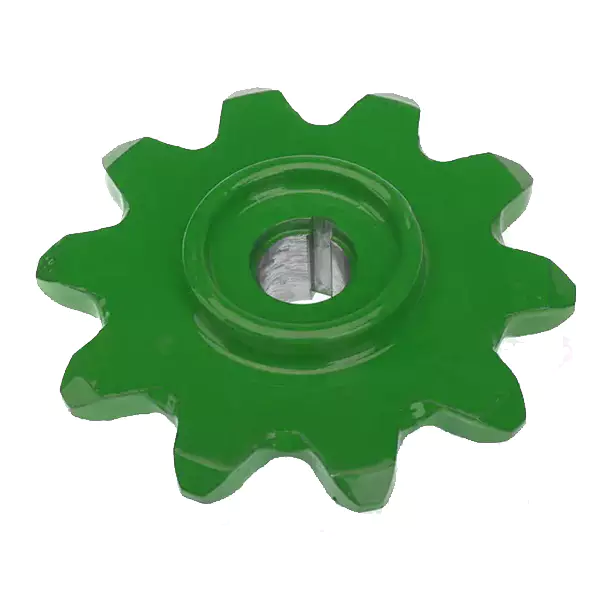
Drive Sprockets
Precision-machined sprockets designed to mesh perfectly with feeding chains.

Frequently Asked Questions (FAQ)
Q1: How do I choose the correct gear ratio for my aquaculture feeding system in Ukraine?A1: The ratio depends on your motor speed and the desired chain velocity. Typically, for pellet transport, a ratio that yields 30-60 RPM at the output shaft is ideal to prevent pellet damage while maintaining throughput.
Q2: What is the benefit of a helical gear reducer over a worm gear for B2B aquaculture buyers?A2: Efficiency. Helical reducers are up to 97% efficient, whereas worm gears can drop to 60%. Over a year of 24/7 feeding, the energy savings alone often pay for the price difference.
Q3: Can these gearboxes be used with VFDs (Variable Frequency Drives) for precise feed control?A3: Yes, our helical units are fully compatible with VFDs. We recommend using a motor with an independent cooling fan if you plan to run at very low frequencies for long periods.
Q4: How often should the oil be changed in a high-humidity environment like Odesa?A4: For synthetic oils, we recommend an initial change after 500 hours and thereafter every 5,000 to 8,000 hours, depending on the moisture levels in your facility.
Q5: Are the materials used in the gear reducer safe for food-grade fish production?A5: We offer food-grade synthetic oil options and stainless steel shafting upon request to ensure total compliance with international food safety standards.
Editor: PXY