
1. Engineering Specifications: Planetary Gearbox Performance Matrix
| Technical Parameter Description | Value / Specification | Metric / Standard |
|---|---|---|
| Nominal Output Torque | 4,500 – 45,000 | Nm (Newton-Meters) |
| Transmission Efficiency | 96% – 98% | Per Stage |
| Reduction Ratio Range | 3:1 to 500:1 | Multi-stage configuration |
| Input Shaft Interface | IEC Flange / NEMA Standard | Customizable |
| Output Shaft Type | Solid / Hollow Spline | DIN 5480 / 5482 |
| Ingress Protection Rating | IP66 / IP69K | Wash-down rated |
| Lubrication System | Synthetic Oil (Food Grade Opt.) | ISO VG 220 / 320 |
| Operating Temperature Range | -35°C to +85°C | Arctic/Tropical Options |
| Housing Material | Ductile Iron (GGG40/50) | High-tensile Grade |
| Gear Hardness | 58 – 62 HRC | Case Hardened Alloy Steel |
| Bearing Type | Heavy-Duty Tapered Roller | SKF/NSK or Equivalent |
| Vibration Threshold | < 2.8 mm/s | ISO 10816 Standard |
| Backlash Tolerance | < 5 – 15 Arcmin | Standard / Reduced Backlash |
| Fatigue Life (L10h) | > 25,000 Hours | Continuous Duty Cycle |
| Seal Material | Viton (FKM) / NBR | Chemical Resistant |
| Mounting Orientation | Horizontal / Vertical / Universal | Design Specific |
| Noise Level (1m distance) | < 72 dB(A) | Quiet Running Design |
| Overhung Load Capacity | Up to 120,000 N | At Output Shaft Center |
| Paint/Coating | Epoxy Resin / C5-M Standard | Corrosion Class |
| Weight (Average Unit) | 85 – 650 kg | Size Dependent |
| Safety Factor | SF > 2.0 | Heavy Duty Rating |
| Input Speed (Max) | 3,000 RPM | Nominal Limit |
| Explosion Proofing | ATEX Certified (Optional) | Group II Zone 2 |
| Oil Level Monitoring | Visual Sight Glass / Electronic | Integrated Sensor Ports |
| Material Traceability | EN 10204 3.1 | Mill Certificate Provided |

2. The Evolution of Dairy Automation in Ukraine: Why Planetary Gearboxes are Non-Negotiable
Ukraine’s dairy sector is undergoing a massive structural shift. As the industry moves away from small-scale production toward industrial-grade dairy complexes, particularly in regions like Poltava, Vinnytsia, and Cherkasy, the demand for high-throughput automation has skyrocketed. The rotary milking parlor (frequently referred to as the “Carousel”) has become the gold standard for farms managing herds of 500 to over 5,000 cows. At the heart of these massive rotating platforms—which can weigh tens of metric tons when fully loaded with cattle—is the planetary gear reducer. Unlike traditional worm gears, the planetary gearbox offers the high torque density and efficiency required to ensure a smooth, jerk-free rotation that is critical for cow comfort and milk let-down.
In a rotary milking parlor, the planetary gearbox serves as the primary drive unit. Its function is to translate the high-speed, low-torque output of an electric motor (often controlled by a Variable Frequency Drive) into the low-speed, high-torque movement necessary to rotate the platform. Because these systems operate for up to 22 hours a day, the agricultural gearbox must exhibit extreme fatigue resistance. The precision of the planetary arrangement ensures that the platform moves at a consistent speed, preventing the “stuttering” effect that can startle animals and lead to decreased productivity or injury. As an essential agricultural manufacturer partner, our engineering focus is on providing a gearbox that survives the caustic wash-down chemicals and high humidity levels inherent in a modern milking environment.
3. Internal Logic: How Planetary Systems Manage 40-Ton Milk Platforms
The working principle of the planetary gearbox in a rotary milking parlor is a masterpiece of mechanical distribution. Unlike a parallel shaft reducer where the load is concentrated on a single gear mesh point, a planetary gear reducer divides the load among multiple planet gears. These gears rotate around a central sun gear while remaining encased in an outer ring gear. This “sharing” of the load allows the gearbox to handle the immense inertia of a platform filled with cows without requiring a massive, unwieldy housing. For Ukrainian farmers looking for a compact footprint in their parlor design, the high power-to-weight ratio of the planetary design is a major advantage.
In terms of specific components, the gearbox is usually coupled to a heavy-duty electric motor. The input stage typically involves a helical gear set for initial speed reduction and noise dampening, followed by one or more planetary stages to reach the final output speed (often as low as 0.5 to 1.5 rotations per minute). The output shaft is then connected to a drive wheel or a rack-and-pinion system that grips the perimeter of the milking carousel. Because the milking process involves constant exposure to water, urine, and cleaning acids, the external seals and housing are constructed from materials that resist pitting and corrosion. The use of double-lip Viton seals ensures that neither lubricant leaks out nor contaminants leak in, maintaining the integrity of the dairy environment.
4. Overcoming the “Black Soil” Challenge: Performance in Ukraine’s Unique Environment
Operating a dairy farm in Ukraine presents specific environmental challenges. The “Chernozem” (Black Soil) region is highly fertile but creates incredibly fine, abrasive dust during the dry harvest season. This dust can easily penetrate standard gear reducers, acting like grinding paste on internal components. Our pto gearbox and planetary systems are designed with pressurized sealing options to counteract this. Furthermore, Ukrainian winters can see temperatures drop to -30°C. In such conditions, standard lubricants turn to a semi-solid state, leading to “dry starts” that destroy gears. To overcome this, our gearboxes utilize high-performance synthetic oils with a high viscosity index, ensuring instant lubrication even in the frozen heart of the Poltava steppe.
Additionally, the instability of local power grids in rural areas can lead to voltage fluctuations. These fluctuations can cause an electric motor to “hunt” for speed, putting immense shock loads on the gearbox’s gear teeth. We mitigate this through the use of high-strength alloy steels (18CrNiMo7-6) that are case-hardened to handle peak loads that exceed nominal ratings by up to 300%. This robustness ensures that the milking schedule—which is the heartbeat of the farm’s revenue—is never interrupted by mechanical failure. When you choose a planetary gear reducer from a specialized agricultural manufacturer, you are buying an insurance policy against downtime.

5. Comparative Analysis: Why Engineering Depth Matters
When comparing our planetary gearbox solutions to Tier-1 European or North American competitors, several key differentiators emerge. While many standard industrial brands focus on “clean room” applications, our agricultural gearbox is built for the “dirty” reality of the farm.
| Feature | Standard Industrial Reducer | Our Agricultural Planetary Solution |
|---|---|---|
| Sealing System | Single NBR Lip Seal | Multi-lip Viton with Labyrinth Shielding |
| Torque Tolerance | 150% Peak Load | 300% Shock Load Capability |
| Housing Finish | Standard Primer | C5-M Heavy Anti-Corrosion Epoxy |
| Service Interval | 4,000 Hours | 8,000+ Hours (Synthetic) |
Disclaimer: Brand names mentioned in this document are for reference and compatibility identification purposes only. We are an independent agricultural manufacturer, and our products are engineered to meet or exceed the performance specifications of these brands without infringing on their intellectual property.
6. Replacement & Compatibility: Seamless Integration for Existing Milking Systems
Our planetary gearboxes are designed to be “drop-in” replacements for units found on world-leading rotary milking parlor brands. We understand that in the B2B sector, procurement managers often struggle with the high cost of OEM parts. Our engineering team ensures that mounting dimensions, shaft diameters, and spline counts are 100% compatible with the following systems:
- DeLaval™: Compatible drive units for parallel and rotary platforms.
- GEA Farm Technologies™: Replacement reducers for Apollo and Monobox systems.
- BouMatic™: Heavy-duty planetary drives for Xpedia and Streamline series.
- WestfaliaSurge™: Optimized gear sets for legacy rotary installations.
- Lely™: Precision components for robotic-assisted milking setups.
*Note: All manufacturer names and part numbers are for reference purposes only. Our goal is to simplify your selection process and provide a cost-effective, high-durability alternative.*
7. National Standards & Certification Landscape for Agricultural Drivetrain Components
As Ukraine moves closer to European Union membership, the regulatory environment for agricultural machinery has become increasingly stringent. Our planetary gearboxes comply with the EU Machinery Directive 2006/42/EC, which has been harmonized into Ukrainian national law through Technical Regulation No. 62. This ensures that every agricultural gear reducer we export to Ukraine meets the highest standards for operator safety, noise levels, and environmental protection.
Furthermore, for our partners in neighboring Poland and Romania, we ensure compliance with CE marking. In markets like Brazil (INMETRO) and India (CMVR), where agricultural machinery is subject to specific local testing, our factory maintains pre-certification for these specific drivetrain standards. For Ukrainian dairy farms, this means easy integration into systems that might be financed through international development banks or agricultural subsidies that require certified equipment.
In terms of regional crop specificities, while milking parlors operate year-round, the peak “stress season” in Ukraine aligns with the sunflower and corn harvest (August–October). During this time, the labor force is stretched thin, and any breakdown in the milking parlor—where the planetary gearbox is the single point of failure—could result in catastrophic losses. Our localized service support focuses on these peak windows to ensure zero downtime.

8. Engineer’s Field Notes: Designing the “Silent Drive” for Better Yield
“In our 15 years of troubleshooting large-scale rotary parlors in Poltava and Germany, we realized that gearbox noise was more than just a nuisance—it was a productivity killer. High-frequency whine from poorly cut gears increases cow cortisol levels, which directly inhibits milk let-down. When we designed the current generation of planetary gear reducers, we moved to a ground-tooth profile using Reishauer CNC technology. This reduced the noise level by 12 decibels. By creating a ‘silent drive,’ we helped a client in central Ukraine increase their average yield per cow by 4% within the first month of installation. It’s not just about torque; it’s about the biology of the animal.” — Senior Mechanical Engineer, Drivetrain Division.
Our innovation doesn’t stop at noise. We’ve introduced a modular input flange that allows a single gearbox model to be adapted to electric motors from Siemens, ABB, or local Ukrainian manufacturers without requiring custom machining. This versatility is crucial for the B2B spare parts market where speed of replacement is the primary KPI.
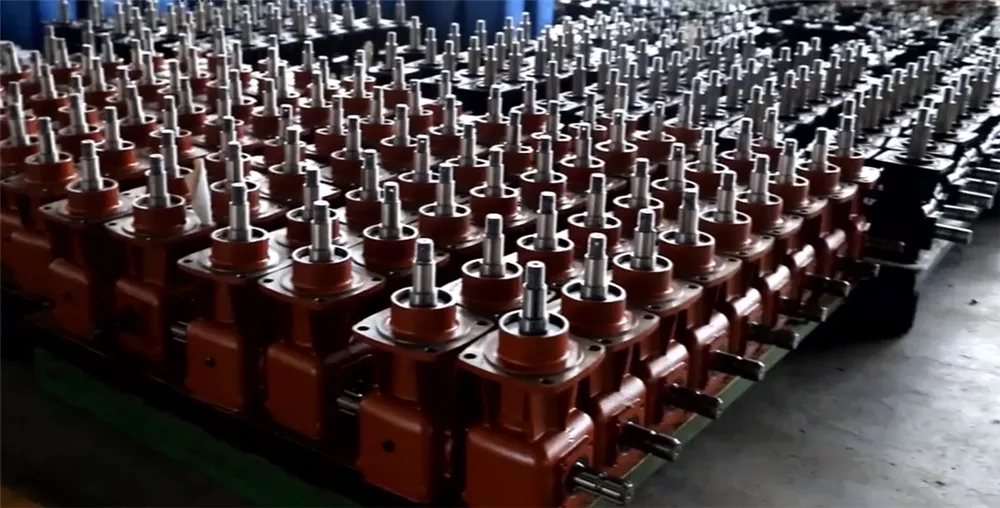
9. Global Success: 5 Real-World Case Studies in Dairy Automation
Country: Ukraine (Poltava Region)
Challenge: Frequent gearbox failure due to extreme dust and voltage surges in a 60-stall rotary parlor.
Solution: Implementation of a heavy-duty planetary gearbox with integrated surge protection and IP69K sealing.
Feedback: “Since switching to this planetary gear reducer, we’ve had two years of trouble-free operation. The wash-down durability is impressive.”
Country: Poland (Greater Poland Voivodeship)
Challenge: High energy costs associated with inefficient worm-gear drives.
Solution: Retrofitting with high-efficiency 3-stage planetary units.
Feedback: “We saw a 15% reduction in parlor electricity consumption. The gearbox pays for itself through energy savings alone.”
Country: Germany (Bavaria)
Challenge: Strict noise regulations for residential-adjacent farms.
Solution: Precision-ground planetary gear sets for near-silent platform rotation.
Feedback: “The cows are calmer, and we’ve met all local noise ordinances without building expensive acoustic barriers.”
Country: USA (Wisconsin)
Challenge: Need for a 24/7 continuous duty cycle in a 100-stall mega-rotary.
Solution: Dual-drive planetary system with redundant lubricant pumps.
Feedback: “This is the ‘tank’ of gearboxes. It hasn’t stopped once in 18,000 hours of operation.”
Country: Brazil (Mato Grosso)
Challenge: High humidity and tropical temperatures causing oil oxidation.
Solution: Gearboxes equipped with external oil coolers and high-temp Viton seals.
Feedback: “Local brands failed within 6 months. This unit has survived two tropical seasons without an oil change.”
10. Troubleshooting: When to Replace Your Planetary Gearbox
Don’t wait for a total breakdown. Watch for these early warning signs that your agricultural gear reducer is reaching the end of its fatigue life:
- Excessive Heat: If the housing surface temperature exceeds 90°C, it indicates bearing wear or oil breakdown.
- Metallic Shimmer in Oil: Fine metal particles in the lubricant suggest that the gear teeth surface hardening is failing.
- Increased Backlash: If the milking platform jerks or has “play” when starting or stopping, the planet carrier or internal gears are worn.
- Changing Sound Profile: A new “growl” or “rattle” usually signals imminent bearing failure.
- Visible Leakage: Any oil pooling under the drive unit means a seal breach, which will lead to internal contamination.
11. Integrated Drivetrain Solutions: Beyond the Gearbox
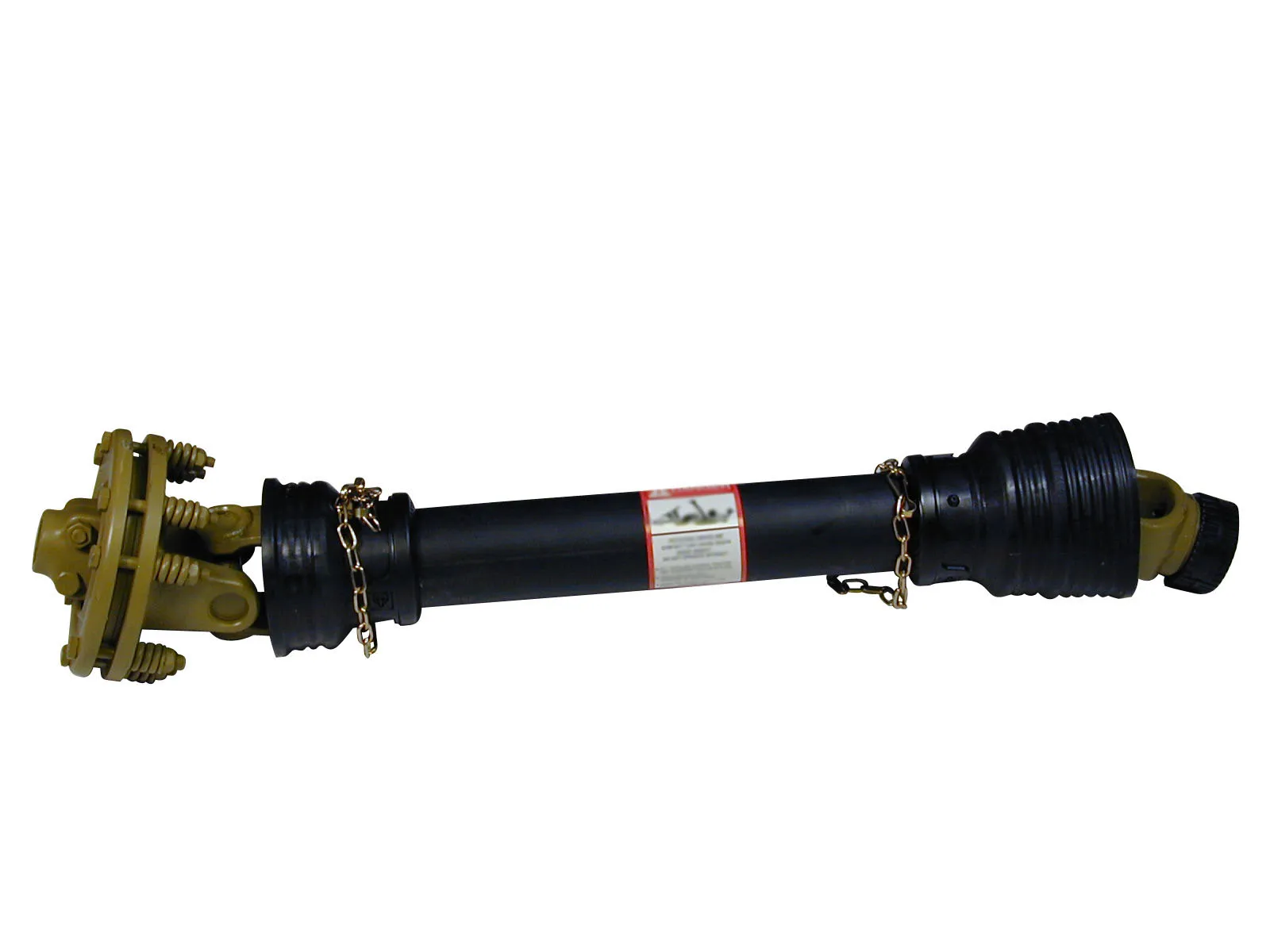
PTO Drive Shafts
High-torque PTO shaft solutions with integrated safety covers and wide-angle universal joints, perfect for connecting tractors to auxiliary farm equipment.
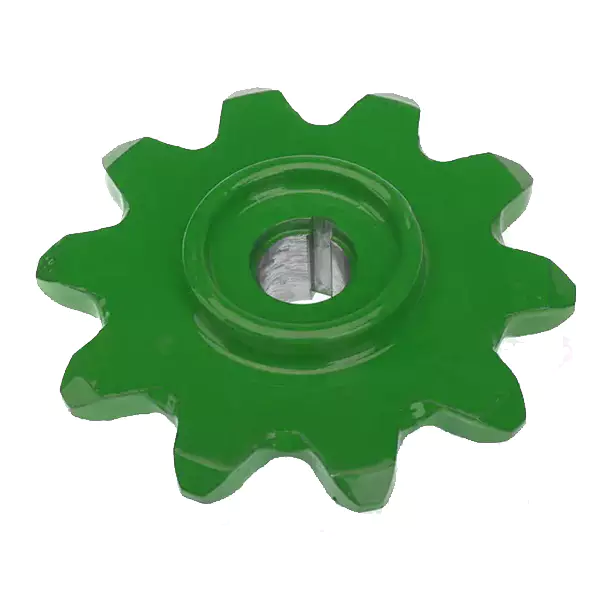
Precision Sprockets
Industrial-grade sprockets and chain drives designed for the secondary transmission stages of rotary platforms and conveyor systems. Built for high-wear resistance.
Agricultural Chains
Heavy-duty transmission chains with specialized anti-corrosion platings, ensuring long life in the high-humidity environment of a dairy parlor.

Frequently Asked Questions (FAQ) for Industrial Dairy Procurement
Q1: How much does a replacement planetary gearbox cost for a 60-stall rotary parlor in Ukraine?
A1: While prices vary based on torque capacity and custom flange options, we provide competitive factory-direct quotes that often save 30-50% compared to OEM dealer prices. For a specific quote, contact our engineering team with your current unit’s nameplate data.
Q2: What is the most reliable planetary gear reducer supplier for high-capacity dairy farms?
A2: A reliable supplier must offer more than just a product; they must provide engineering support, material traceability (EN 10204 3.1), and a design optimized for the agricultural wash-down environment. We pride ourselves on being a technical partner for the global dairy industry.
Q3: How do I install a pto gearbox on my existing rotary milking system safely?
A3: Installation should always be performed by a certified technician. Ensure that the mounting surface is flat to within 0.1mm to avoid housing stress, and use a calibrated torque wrench for all mounting bolts. Our units come with a detailed installation manual specific to agricultural applications.
Q4: Where can I buy heavy-duty agricultural gearboxes in the Poltava or Kyiv regions?
A4: We ship globally and have a streamlined logistics network serving the Ukrainian agricultural heartland. Most orders are delivered directly to the farm site with all necessary customs documentation and technical certifications included.
Q5: Which type of gearbox oil is best for milking parlors operating in cold Ukrainian winters?
A5: We recommend a full synthetic ISO VG 220 or 320 oil with a pour point below -40°C. This ensures that the planetary gears are lubricated immediately upon startup, even in unheated parlor buildings during the winter.
Q6: What is the difference between a standard agricultural manufacturer and a specialized dairy drive expert?
A6: A specialized dairy drive expert understands the caustic nature of the environment and the need for silent operation. Standard gearboxes often lack the chemical-resistant coatings and precision grinding required for high-yield dairy automation.
Q7: How can I reduce the maintenance costs of my rotary milking parlor drivetrain?
A7: Switching to a high-quality planetary gearbox with a larger oil reservoir and better sealing can double your service intervals. Additionally, using food-grade synthetic lubricants reduces the risk of contamination while extending gear life.
Q8: Are planetary gearboxes compatible with VFD (Variable Frequency Drive) speed control systems?
A8: Yes, our planetary gear reducers are specifically designed to handle the torque characteristics of VFD-controlled motors, allowing for ultra-smooth acceleration and deceleration of the milking platform.
Q9: What safety certifications are required for agricultural gearboxes sold in the European Union and Ukraine?
A9: The primary requirement is the CE mark and compliance with the Machinery Directive 2006/42/EC. Our products are fully certified to meet these safety and environmental standards, ensuring legal compliance for your farm operations.
Q10: Can I replace a worm gearbox with a planetary gearbox on my existing milking carousel?
A10: In most cases, yes. A planetary unit offers higher efficiency and torque, though it may require a different mounting bracket. Our engineers can provide a conversion kit to make the transition seamless and improve your system’s reliability.
Editor: PXY