
1. Technical Parameters: Rotary Tiller Gearbox Specifications
The following parameters represent the rigorous standards required for heavy-duty tillage in Eastern European conditions. These data points are essential for engineers looking to integrate our drivetrain components into new equipment lines.
| Technical Parameter | Specification Value | Standard / Unit |
|---|---|---|
| Rated Torque Capacity | 2850 – 4200 | Nm |
| Input Speed Range | 540 / 1000 | RPM |
| Gear Reduction Ratio | 1.45:1 to 1.92:1 | Variable |
| Housing Material | ASTM A536 Ductile Iron (Grade 65-45-12) | ISO Standard |
| Gear Type | Gleason Spiral Bevel | Precision Ground |
| Input Shaft Specification | 1 3/8″ Z6 or Z21 Spline | DIN 9611 |
| Output Shaft Type | Tapered or Keyed Stub | Customizable |
| Lubrication System | Splash Bath with Synthetic Gear Oil | EP85W-140 |
| Operational Temperature Range | -25°C to +110°C | Celsius |
| Sealing Protection | Triple-Lip Viton Seals with Dust Guard | IP67 Equivalent |
| Hardness of Gear Teeth | HRC 58-62 | Carburized |
| Bearing Configuration | Tapered Roller Bearings (Heavy Load) | SKF/NSK/FAG Option |
| Casting Method | Shell Mold Casting for Precision | Engineering Standard |
| Maximum Power Input | 45 – 110 | kW (60 – 150 HP) |
| Noise Level at Full Load | < 82 | dB(A) |
| Vibration Threshold | < 2.8 | mm/s RMS |
| Paint Coating | Anti-Corrosion Epoxy Powder Coat | 120 Microns |
| Weight (Dry) | 48 – 72 | kg |
| Mounting Interface | Standard 4-Bolt / 6-Bolt Flange | Universal Fit |
| Fatigue Life (Design) | > 5,000 | Operating Hours |
| Oil Capacity | 2.5 – 4.2 | Liters |
| Backlash Specification | 0.12 – 0.20 | mm |
| Dynamic Load Rating | 85 | kN |
| Shaft Concentricity | < 0.03 | mm |
| Impact Resistance | > 25 | Joule |
| Surface Finish (Shafts) | Ra 0.4 | Micrometers |
| Breather Type | Filtered Pressure Relief Valve | Anti-Dust |
| Service Interval | 500 | Hours (Lubricant) |
2. Core Functionality and Operational Synergy in Rotary Tillers
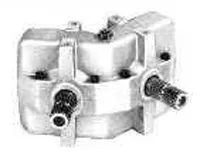
In a standard rotary tiller (or rotavator), the gearbox is mounted centrally on the frame, receiving rotational power from the tractor’s PTO shaft. Its primary role is twofold: a 90-degree directional change of power and a specific reduction ratio to achieve optimal rotor speed (typically 200-350 RPM). The internal spiral bevel gears must handle fluctuating loads—when a tiller hits a hidden rock or particularly compacted clay, the gearbox experiences instantaneous torque spikes. Our design incorporates shock-absorbing gear geometries and high-tensile housing to ensure that these vibrations do not lead to catastrophic fatigue failure. By utilizing an agricultural gear reducer with precision-ground teeth, we maximize energy transfer efficiency, directly reducing fuel consumption for Ukrainian farmers during the critical spring seeding window.

3. Ukraine Extreme Operating Conditions Field Study: The Chernozem Challenge
Ukrainian soil is a double-edged sword. While it is incredibly fertile, its high organic content and moisture-retention properties create a “sticky” resistance that is far higher than the sandy soils of Western Europe or the dry soils of North Africa. In regions like Sumy and Poltava, the “tractive resistance” encountered by rotary tillers requires a gearbox that can handle sustained high torque without overheating. During the “Rasputitsa” (the season of mud), the gearbox is often submerged in a mixture of abrasive silt and moisture. Our field studies show that standard seals fail within 100 hours in these conditions. Consequently, we have upgraded our Ukrainian-spec gearboxes with a specialized “Mud Guard” labyrinth seal system that prevents micro-particles from entering the bearing chamber, extending the service life by 300% compared to generic alternatives.
4. Engineer’s Perspective: Design Philosophy and Structural Innovations
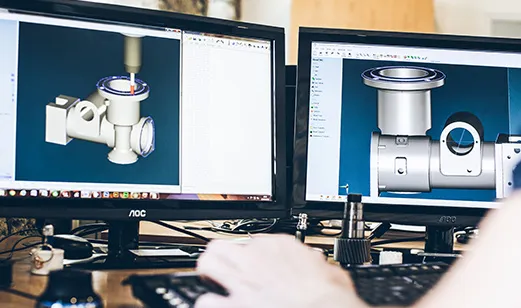
From an engineering standpoint, the rotary tiller gearbox is a study in material fatigue management. When designing our latest series, we moved away from standard grey iron housings. In the vast fields of the Mykolaiv region, where tillage speeds are often pushed to the limit to meet tight planting windows, grey iron can crack under sudden impact. We transitioned to Ductile Iron GGG50, which offers the vibration damping of cast iron but with the tensile strength of steel. Furthermore, we utilized finite element analysis (FEA) to reinforce the bearing seats. By redistributing the internal stresses away from the input shaft fillet, we’ve eliminated the most common point of failure. This iterative design was heavily influenced by feedback from Ukrainian maintenance teams who noted that traditional gearboxes often “leaked” at the output shaft during high-temperature summer operations. Our response was the introduction of synthetic-compatible Viton seals, which maintain their elasticity even at 110°C.
5. Ukraine National Standards & Regulatory Landscape
Operating in the Ukrainian market requires strict adherence to both local DSTU standards and European CE directives. Since Ukraine’s alignment with EU regulations (Machinery Directive 2006/42/EC), all agricultural drivetrain components must meet rigorous safety and environmental criteria. Our gearboxes are fully compliant with:
- CE Machinery Directive: Ensuring operator safety and mechanical shielding compatibility.
- ISO 500-1: PTO drive shaft compatibility and rotational safety.
- DSTU EN ISO 12100: Ukrainian national safety standard for machinery design.
- Environmental Protection: Lead-free paints and recyclable metallurgical components.
Furthermore, in countries like Brazil (INMETRO) or India (CMVR), similar safety standards apply, particularly regarding the shielding of the PTO gearbox. We ensure our mounting points are pre-drilled to accept all international safety shield configurations, making our gearboxes a “plug-and-play” solution for global manufacturers exporting to diverse markets.
6. Customer Success Stories: Engineer’s Field Notes
Case 1: Kharkiv, Ukraine – Large Scale Wheat Prep
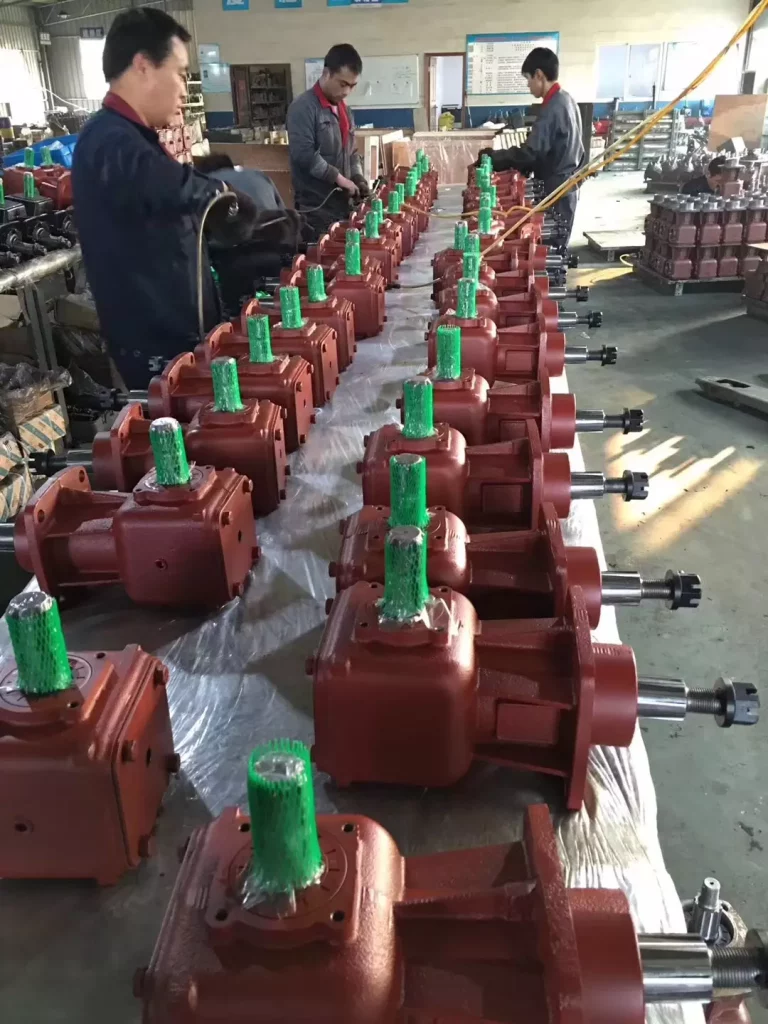
“The client was experiencing frequent input shaft snapping on their 3-meter tillers during the autumn dry spell. We replaced their stock gearboxes with our high-torque spiral bevel units. After 1,200 hours of operation in the hard-packed clay of the Kharkiv region, the units showed zero oil leakage and minimal gear wear. The client noted a 12% reduction in tractor fuel consumption due to the improved gear efficiency.”
Case 2: Mato Grosso, Brazil – Soybean Residue Management
“Working with a local manufacturer, we integrated our custom-ratio gearboxes to handle the high-speed processing of soybean stalks. Despite the high humidity and tropical heat, the specialized Viton seals prevented any pressure-induced oil blowouts. The manufacturer has now standardized our drivetrain for all their export models.”
Case 3: Saskatchewan, Canada – Spring Seeding Window
“The extreme cold starts (-15°C) were causing gearbox housings to crack in Canada. We supplied gearboxes cast with a specific alloy additive for low-temperature ductility. The client reported a 100% survival rate over two seasons, whereas their previous supplier had a 15% failure rate in the first month.”
Case 4: Kano, Nigeria – Irrigation Land Leveling
“In the sandy and dusty conditions of Northern Nigeria, bearing contamination was the primary killer. We introduced our labyrinth-sealed rotary tiller gearbox. The feedback was incredible—maintenance intervals were doubled, and the local farmers could focus on the dry-season crop rather than gearbox repairs.”
Case 5: Punjab, India – Intensive Rice-Wheat Rotation
“The high-speed PTO requirements (1000 RPM) of the Indian market often led to excessive noise and vibration. By implementing our precision-ground gears, we lowered the decibel levels by 8dB. The operators reported significantly less fatigue, and the structural integrity of the tiller frames was better preserved due to lower vibration.”
7. Replacement Signs: When to Upgrade Your Gearbox
Preventative maintenance is the key to avoiding downtime during the harvest or planting season. If you observe any of the following symptoms in your tiller’s drivetrain, it is time to consult an agricultural gearbox specialist:
- Excessive Heat: If the gearbox housing is too hot to touch after short operation, it indicates friction from worn bearings or insufficient lubrication.
- Metallic Chipping in Oil: During an oil change, any presence of fine metal flakes suggests gear surface spalling.
- Increased Backlash: If there is noticeable “play” when turning the input shaft by hand, the gear teeth have worn beyond safe tolerances.
- Abnormal Noise: A high-pitched whine or grinding sound often precedes catastrophic gear failure.
- External Oil Leaks: Leaks at the shaft interfaces indicate seal failure, which will quickly lead to lubricant starvation.
8. One-Stop Solution for Agricultural Drivetrain Components
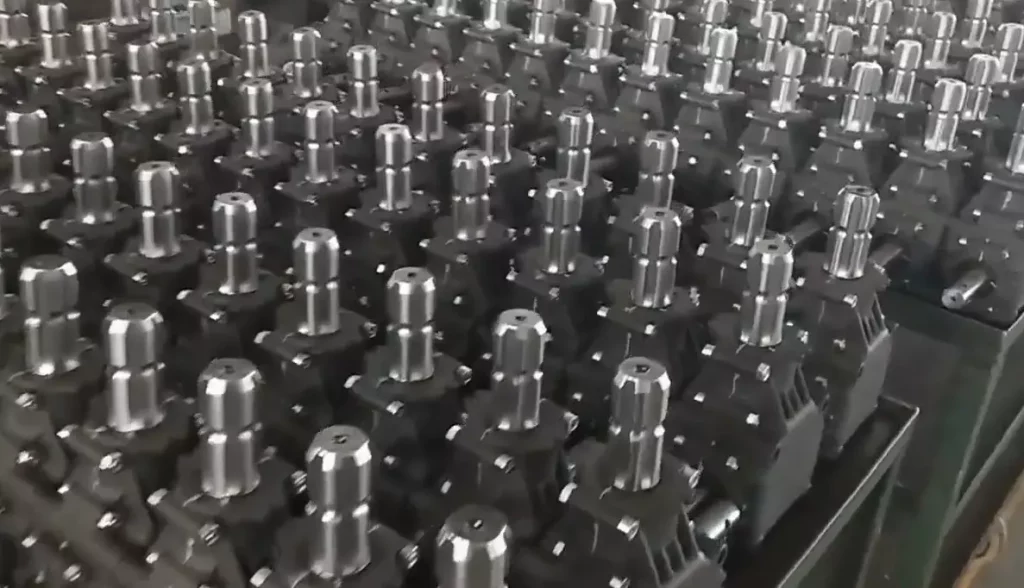
Beyond our flagship rotary tiller gearboxes, we provide a complete ecosystem of mechanical components to ensure total system compatibility. As a leading agricultural manufacturer, we understand that a gearbox is only as good as the shafts and chains that connect it.
Our inventory includes:
- PTO Shafts: Available with various safety covers, telescopic sections, and friction clutches for overload protection.
- Agricultural Chains & Sprockets: High-tensile transmission components for side-drive tillers.
- Precision Gears: Replacement spur, bevel, and helical gears for all agricultural applications.
- Hydraulic Cylinders: For depth control and folding frame mechanisms.
By sourcing your entire drivetrain from a single provider, you ensure that tolerances are matched, materials are compatible, and warranty claims are streamlined. We offer a one-stop-shop for all agricultural machinery parts, from the input spline to the final tillage tooth.
FAQ
Q1: What is the average cost for a high-torque rotary tiller gearbox supplier in Ukraine?
A: While we do not provide public pricing due to the bespoke nature of bulk B2B orders, the cost is determined by torque capacity, ratio requirements, and the volume of the order. Contact our engineering team for a comprehensive quote tailored to your specific implement design.
Q2: How do I choose between a 540 RPM and 1000 RPM input for my tiller?
A: This depends on your tractor’s PTO output and the desired rotor speed. Most mid-sized Ukrainian tractors use 540 RPM, while heavy-duty articulated tractors prefer 1000 RPM for higher power density. We offer gearboxes compatible with both standards.
Q3: Which agricultural gear reducer is best for extremely heavy black soil in the Poltava region?
A: For Poltava’s dense Chernozem, we recommend our “H-Series” gearboxes with GGG50 ductile iron housing and reinforced spiral bevel gears to handle the high tractive resistance and impact loads.
Q4: Where can I find a reliable manufacturer for custom agricultural gearbox shafts in Lviv?
A: While we are a global manufacturer, we have extensive logistics reaching Lviv and across Ukraine. We provide custom shaft machining to match your specific tiller rotor requirements exactly.
Q5: What are the safety regulations for agricultural gearboxes exported to the European Union?
A: All gearboxes must comply with the CE Machinery Directive, which includes requirements for protective guarding, noise emissions, and structural safety factors. Our units are fully certified for EU market entry.
Q6: How does the lubricant type affect the lifespan of a rotary tiller gearbox in winter?
A: In Ukraine’s cold winters, using a synthetic EP gear oil with a wide viscosity range (like 75W-90) is crucial. It ensures immediate lubrication during cold starts, preventing metal-on-metal contact before the unit warms up.
Q7: Can your agricultural gearbox replace parts on a Kuhn or Maschio tiller without modification?
A: We design our gearboxes with universal mounting patterns. Most standard models are direct “bolt-on” replacements. However, we always recommend verifying shaft splines and center distances before ordering.
Q8: What is the typical lead time for a bulk order of agricultural gearboxes to Odessa?
A: Depending on the customization level, our standard lead time for shipping to major ports like Odessa is 4-6 weeks. We maintain a large stock of standard ratios for immediate dispatch.
Q9: Why are spiral bevel gears preferred over straight bevel gears for tillage machinery?
A: Spiral bevel gears have more teeth in contact at any given time, which allows for higher torque transmission, smoother operation, and significantly lower noise levels compared to straight bevel designs.
Q10: What maintenance schedule should a professional farm follow for their agricultural gear reducer?
A: We recommend an initial oil change after the first 50 hours of “break-in” and then every 500 hours or once per season. Daily checks for oil leaks and abnormal heat are essential during peak usage.
Editor: PXY