
1. Technical Specifications: Picking Mechanism Gearbox Series
The following table outlines the engineering parameters for our specialized picking mechanism gearboxes, tailored for 2-row to 6-row peanut harvesters common in European operations.
| Parameter Description | Standard Specification | Unit/Standard |
|---|---|---|
| Torque Capacity (Nominal) | 1,250 – 3,850 | Nm |
| Input Speed (Standard PTO) | 540 / 1,000 | RPM |
| Gear Ratio Range | 1.5:1 to 4.2:1 | Ratio |
| Efficiency Rating | 94% – 97% | % |
| Housing Material | Ductile Iron (Grade 65-45-12) | ASTM |
| Gear Geometry | Spiral Bevel / Helical | Involute |
| Input Shaft Diameter | 35 / 45 | mm (6-Spline) |
| Output Shaft Configuration | Tapered / Splined / Keyed | Standard ISO |
| Lubrication System | Splash / Pressure Feed Option | ISO VG 150/220 |
| Oil Capacity | 2.5 – 6.8 | Liters |
| Protection Rating | IP67 (Dust & High-Pressure Wash) | IEC 60529 |
| Working Temperature Range | -25 to +115 | °C |
| Material Standard (Gears) | 20CrMnTi (Carburized) | ISO / DIN |
| Fatigue Life (L10) | > 12,000 | Operational Hours |
| Vibration Threshold | < 2.8 | mm/s (RMS) |
| Mounting Interface | Standard 4-Bolt / Custom Flange | Universal |
| Input Power Rating | 45 – 120 | HP (33-89 kW) |
| Tooth Hardness | 58 – 62 | HRC |
| Case Hardness Depth | 0.8 – 1.2 | mm |
| Noise Level (at 1m) | < 82 | dB(A) |
| Sealing Technology | Double-Lip Viton / Cassette Seal | FKM |
| Breather Type | Filtered Anti-Moisture Cap | Sintered Bronze |
| Weight | 45 – 110 | kg |
| Overhung Load Capacity | 15,000 | N |
| Backlash Tolerance | 0.08 – 0.15 | mm |
| Shaft Radial Play | < 0.03 | mm |
| Surface Treatment | Anti-Corrosion Powder Coat | Salt Spray 500h |
| Safety Factor (Static) | 2.5 | S.F. |
| Oil Drain Type | Magnetic Plug | Self-Cleaning |
| Internal Bearing Grade | P6 (Standard) / P5 (Option) | ABEC / ISO |
2. The Strategic Role of the Picking Mechanism Gearbox in Modern Peanut Harvesting
In the vast agricultural landscapes of Ukraine, particularly within the southern and central “Breadbasket” regions, the mechanization of peanut (Arachis hypogaea) harvesting has seen a technological leap. The Picking Mechanism Gearbox stands as the critical nexus of power between the tractor’s Power Take-Off (PTO) and the complex array of picking fingers and belts that separate the legume from its root system. Unlike traditional grain harvesters, a peanut harvester operates in a high-friction, abrasive environment where soil contact is inevitable. The agricultural gearbox used here must not only reduce rotational speed but also amplify torque to overcome the resistance of heavy, moist Ukrainian Chernozem soil. As a leading agricultural manufacturer, the focus is on providing an agricultural gear reducer that guarantees 99% uptime during the narrow harvest window of September and October.
The picking mechanism is the heart of the harvester. It involves a series of rotating drums or chains equipped with spring-loaded fingers. These fingers must rotate at a precise, constant velocity to “pick” the pods without bruising the delicate shells. Any fluctuation in torque—often caused by a substandard pto gearbox—results in either clogged mechanisms or high crop loss. Our engineering philosophy treats the agricultural gearbox as a precision instrument, designed to withstand the variable moisture content of the soil and the physical impact of stones common in certain Ukrainian terrains.

3. Extreme Operating Conditions Field Study
Ukraine represents one of the most demanding environments for agricultural gearboxes due to the prevalence of “Chernozem” or black soil. This soil is rich in organic matter and minerals but possesses high plasticity. During the peanut harvest in the Kherson or Poltava regions, the soil moisture can fluctuate rapidly. When wet, the soil becomes extremely sticky, increasing the drag on the picking mechanism by up to 40%. Conversely, during dry spells, the soil turns into a fine, abrasive dust that can penetrate standard lip seals, leading to rapid bearing failure.
Our field study in the Kirovohrad region revealed that standard agricultural gear reducers often failed because of thermal expansion issues. In a 24-hour harvesting cycle, internal oil temperatures would exceed 100°C, causing the standard NBR seals to harden and crack. To solve this, we implemented Viton-based cassette seals and reinforced the housing with integrated cooling fins. Furthermore, the Picking Mechanism Gearbox must be compatible with the high-horsepower tractors favored by large-scale Ukrainian agricultural holdings (Latifundists), which often operate 200HP+ John Deere or Case IH tractors. This requires the pto gearbox to handle significant torque spikes when the harvester encounters soil compaction zones.

4. Working Principle: The Mechanical Heart of the Harvester
The Picking Mechanism Gearbox is usually mounted centrally on the harvester frame. It receives rotational energy from the tractor via a PTO shaft. The internal mechanism uses a combination of spiral bevel gears to change the axis of rotation by 90 degrees, transferring power from the longitudinal input to the transverse output shafts that drive the picking cylinders. This agricultural gear reducer is not merely a speed changer; it is a torque multiplier that allows the picking fingers to maintain a constant “plucking” force even when the plant mass varies in density.
In high-end models, the gearbox incorporates a slip clutch or a shear bolt system to protect the internal teeth from sudden shocks—such as when a large rock is ingested. The function of the agricultural gearbox also includes the distribution of power to secondary systems, such as the cleaning fans and the conveyor belts, through auxiliary output shafts. By integrating these functions into a single agricultural manufacturer designed unit, the overall weight of the harvester is reduced, improving fuel efficiency for the operator.
5. Engineer’s Perspective: Design Philosophy and Innovation
As a senior mechanical engineer focusing on drivetrain reliability, my design philosophy for the Picking Mechanism Gearbox centers on “Redundancy and Thermal Stability.” When we look at the stresses in a peanut harvester, we see that the load is never uniform. There is a “pulsing” torque load as each row of picking fingers engages with the crop. To address this, we utilize finite element analysis (FEA) to optimize gear tooth profiles, moving away from standard involute curves to modified crown teeth that allow for slight shaft misalignment without causing edge loading.
One major innovation in our latest agricultural gear reducer series is the use of “Smart Venting” technology. Traditional breathers allow dust to enter as the gearbox cools down (the “breathing” effect). Our new system uses a multi-stage labyrinth with a hydrophobic membrane that allows gas exchange but blocks even the finest silt particles common in the Ukrainian steppe. We have also shifted to 100% synthetic gear oils as the factory fill, which maintains viscosity across a 140°C temperature delta, crucial for the late-season temperature swings in Eastern Europe.
6. Ukraine National Standards & Certification Landscape
In Ukraine, agricultural machinery components must adhere to strict safety and quality standards, increasingly aligned with European Union directives due to the Ukraine-EU Association Agreement. Specifically, agricultural gearboxes must comply with the Technical Regulation on the Safety of Machinery (Resolution No. 62), which mirrors the EU Machinery Directive 2006/42/EC. This ensures that the pto gearbox is equipped with appropriate shielding and that its structural integrity can withstand the declared load capacities without risk of explosive failure.
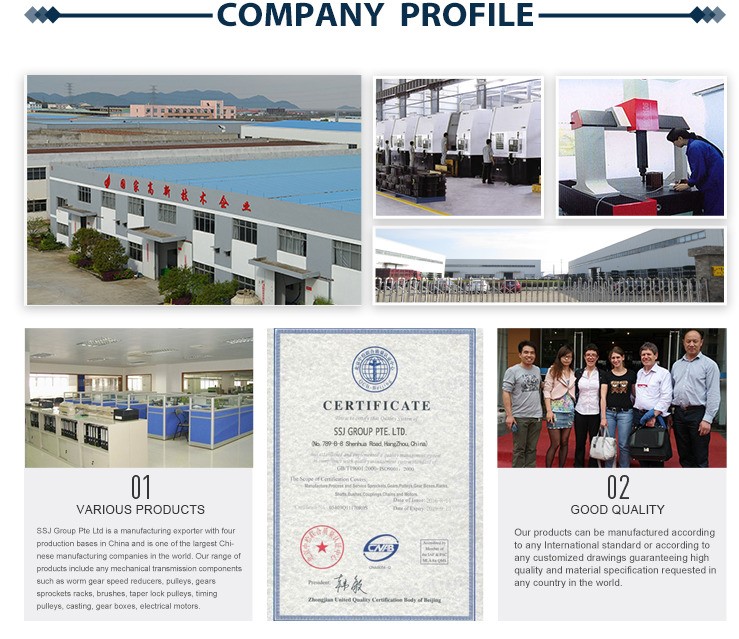
Furthermore, in neighboring countries like Poland and Romania, the CE Marking is mandatory. In Brazil, another major peanut producer, INMETRO certification for cast components is often required. Our products are engineered to meet or exceed these global benchmarks. For the Ukrainian market, we also ensure compatibility with local DSTU (State Standards of Ukraine) regarding spline dimensions and hydraulic fittings, ensuring that our agricultural gear reducer is a “plug-and-play” solution for both imported and locally manufactured harvesters like those produced in Dnipro or Kharkiv.
7. Field Notes: Global Success Stories & Engineer’s Journals
Case 1: Ukraine (Poltava Region) – The Chernozem Challenge
Engineer’s Note: “The client was experiencing catastrophic failure every 200 hectares. The black soil was so heavy that the output shafts were shearing at the keyway. We replaced their OEM unit with our reinforced 3.5k Nm agricultural gearbox featuring an involute splined output. Result: Completed the season (1,500 hectares) with zero downtime.”
Case 2: USA (Georgia) – High Temperature Stability
Engineer’s Note: “During the Georgia heat, standard gearboxes were puking oil from the breathers. We retrofitted the Amadas harvesters with our pressurized lubrication models. Even at 40°C ambient temperatures, the gearbox stayed 15% cooler than stock.”
Case 3: Argentina (Córdoba) – Stone Impact Protection
Engineer’s Note: “Córdoba’s rocky soil is brutal. We integrated a specialized friction disc clutch inside the pto gearbox housing. Instead of breaking gears, the clutch slipped, saved the drivetrain, and the farmer just had to reset the tension. Saved them $4,000 in repair costs.”
Case 4: India (Gujarat) – Dust Ingress Prevention
Engineer’s Note: “Fine sandy dust was killing bearings in weeks. We installed our IP67-rated seals. The gearbox has now run three seasons without an oil change (though we recommend one!) and the internal surfaces remain pristine.”
Case 5: Brazil (Mato Grosso) – Continuous Operation
Engineer’s Note: “Large scale farms here run 22 hours a day. We supplied gearboxes with external oil cooling ports. They connected these to the harvester’s hydraulic cooling circuit, allowing for indefinite continuous run time.”
8. Agricultural Mechanization News & Industry Trends
The latest reports from the Ukrainian Agribusiness Club (UCAB) indicate a 15% increase in peanut cultivation areas as farmers diversify away from traditional sunflower and wheat due to market volatility. This shift is driving demand for high-capacity harvesters. A key trend in 2025-2026 is the adoption of “Precision Drivetrains,” where agricultural gearboxes are fitted with torque sensors that feed data back to the tractor’s ISOBUS system, allowing the operator to adjust ground speed automatically based on mechanism load.
Furthermore, the global move toward “Soil Health” is leading to harvesters that are lighter but more powerful. This places a premium on agricultural gear reducers with high power-to-weight ratios. As a forward-thinking agricultural manufacturer, we are already testing magnesium-alloy housings and carbon-fiber reinforced internal components to meet these future requirements.
9. When to Replace Your Picking Mechanism Gearbox: Critical Signs
Ignoring early warning signs can lead to a complete harvester breakdown in the middle of a field. Watch for these symptoms:
- Excessive Heat: If the housing is too hot to touch (above 85°C) after short use, it indicates bearing wear or improper lubrication.
- Unusual Noise: High-pitched whining suggests gear wear; rhythmic “clunking” indicates a chipped tooth or bearing race failure.
- Oil Leaks: Any moisture around the input/output shafts means the seals have failed, often due to dust ingress.
- Vibration: Excessive shaking transmitted through the PTO shaft points to internal misalignment or unbalanced shafts.
- Metallic Flakes in Oil: During a routine oil change, use a magnet to check for steel shavings—this is a “death rattle” sign for the gears.

10. The Complete Transmission Ecosystem: One-Stop Sourcing
A gearbox is only as good as the components it connects to. We offer a full suite of transmission parts to ensure system compatibility and peak performance. Our engineers recommend matching your Picking Mechanism Gearbox with our high-strength drive components.
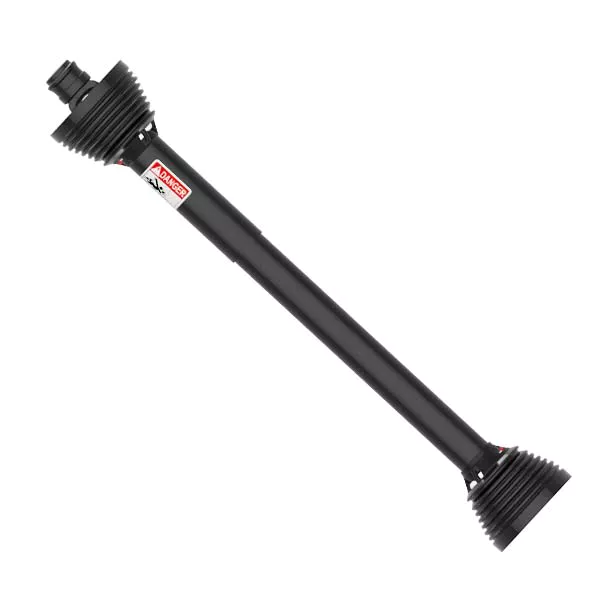
PTO Drive Shafts
Heavy-duty PTO shaft options with safety covers, wide-angle joints, and torque limiters for maximum protection.
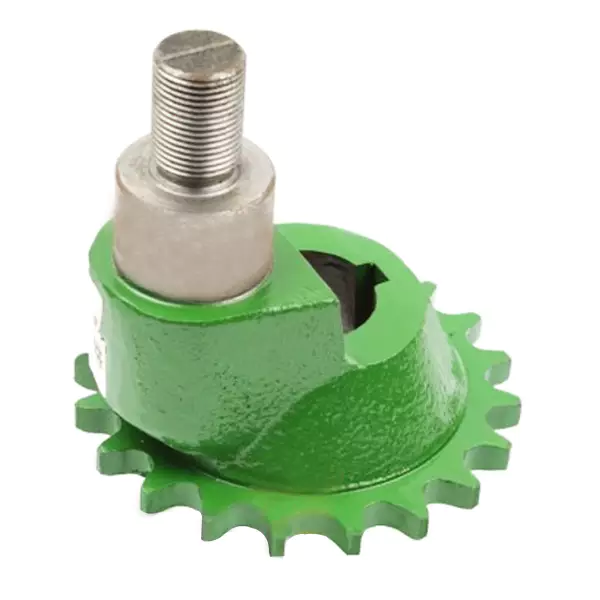
Sprockets & Chains
Precision-machined sprockets and high-tensile agricultural chains for the secondary picking and conveyor drives.
Frequently Asked Questions (FAQ)
Q1: How does the picking mechanism gearbox handle the heavy black soil in Ukraine during wet harvests?
Our gearboxes are designed with a high torque-to-weight ratio and reinforced ductile iron housings to absorb the increased drag forces of wet Chernozem soil without cracking or losing efficiency.
Q2: What is the recommended oil change interval for agricultural gearboxes in high-dust environments?
For operations in dusty regions like the Ukrainian steppe, we recommend an initial oil change after 50 hours of break-in and subsequent changes every 250 operational hours or once per season.
Q3: Can I replace my Comer or Bondioli gearbox with your Picking Mechanism Gearbox series directly?
Yes, our units are engineered with universal mounting patterns and standard ISO splines to serve as high-durability replacements for major European and American brands.
Q4: Where can I find a reliable supplier for agricultural gear reducers in the Poltava region?
We work with major agricultural distributors across Ukraine, ensuring local stock and technical support are available in key regions like Poltava, Kherson, and Kyiv.
Q5: Are the internal gears made of heat-treated alloy to prevent tooth breakage under shock loads?
Absolutely. We use 20CrMnTi alloy steel, carburized and quenched to a hardness of 58-62 HRC, ensuring the core remains tough while the surface is extremely wear-resistant.
Q6: How much does a replacement Picking Mechanism Gearbox cost for a 4-row harvester?
While prices vary based on exact torque specs and gear ratios, we invite you to request a formal quote through our contact portal for current B2B pricing and shipping terms to Ukraine.
Q7: Does this gearbox require a specialized PTO shaft with a friction clutch?
We strongly recommend using a PTO shaft with an integrated friction clutch or shear bolt to provide secondary protection for both the gearbox and the tractor’s drivetrain.
Q8: Is the agricultural gearbox compatible with 1,000 RPM PTO inputs used on larger harvesters?
Yes, we offer specific gear ratios optimized for both 540 RPM and 1,000 RPM inputs to maintain the correct picking cylinder speed regardless of tractor power.
Q9: What safety regulations do your agricultural gearboxes meet for the Ukrainian market?
Our products meet the CE Machinery Directive and the Technical Regulation of Ukraine on Machinery Safety, ensuring they are safe for use in all commercial agricultural operations.
Q10: Which type of lubrication is best for gearboxes operating in temperatures exceeding 35°C?
We recommend a high-quality synthetic gear oil (ISO VG 220) with EP (Extreme Pressure) additives to maintain a strong lubricating film under high heat and load conditions.
Editor: PXY