1. Technical Specification Protocol: Multi-Node Power Distribution Metrics
The complexity of Combined Tillage & Multi-Gearbox systems requires a rigorous set of parameters to match the implement’s soil-engaging intensity. Below are the key engineering metrics for our heavy-duty Ukrainian tillage series.
| Engineering Parameter Identifier | Standard Specification / Industrial Value |
|---|---|
| System Power Input (Max HP) | 150 HP – 450 HP (Multi-engine compatible) |
| Input PTO Standard (RPM) | 1000 RPM (ISO 500 / 21-Spline preferred) |
| Primary Splitting Ratio | 1:1 / 1:1.25 (Central distribution node) |
| Secondary Reduction Ratios | 1:1.92 / 1:2.5 / 1:3.0 (Localized rotor torque) |
| Peak System Torque (Nm) | 4,500 Nm – 12,000 Nm (Distributed) |
| Gearbox Housing Grade | Ductile Iron QT500-7 (High-vibration damping) |
| Bevel Gear Metallurgy | 20CrMnTi Alloy (Carburized and Quenched) |
| Tooth Profile Hardness (HRC) | HRC 58-62 (Induction hardened surface) |
| Internal Spline Tolerance | 6H / 7g (Precision ground finish) |
| Lubrication Volume per Node | 3.5L – 12L (Multi-chamber isolated system) |
| Seal Architecture | Viton Cassette Seals (Multi-lip mud protection) |
| Bearing Precision Tier | P5 / P6 Grade Tapered Roller Bearings |
| Ingress Protection Rating | IP66 (High-pressure water and dust resistant) |
| Operational Temp Gradient | -25°C to +105°C (Extreme summer tested) |
| Vibration RMS Threshold | < 2.8 mm/s (Low-harmonic distortion housing) |
| Reverse Torque Protection | Integrated Overrun Clutch / Hydraulic Protection |
| Casing Cooling Feature | Oversized Radiating Fins (Increased 35% surface) |
| Mounting Interface | ISO Standard 8-Bolt Reinforced Flange |
| Anti-Corrosion Standard | ISO 12944-C5 (Extreme durability coating) |
| Service Factor (Sf) | 2.0 – 2.5 (Heavy-duty cycle rated) |
2. Engineering Complex Drivetrains: The Combined Tillage & Multi-Gearbox Architecture for Ukraine’s Large-Scale Agriculture
In the expansive agricultural heartland of Ukraine, where the “Chernozem” black soil offers unparalleled fertility but demands immense mechanical power, the shift toward high-efficiency, multi-stage soil preparation is definitive. The modern combined tillage machine, designed to perform stubble cultivation, deep loosening, and seedbed preparation in a single pass, relies on a sophisticated Combined Tillage & Multi-Gearbox system. This complex transmission network acts as the central nervous system of the implement, managing the power flow from the high-HP tractor through a primary pto gearbox into multiple secondary agricultural gear reducer units. As a professional agricultural manufacturer, we understand that managing torque across multiple synchronized axes is the key to preventing drivetrain failure in the heavy, compacted soils of the Vinnytsia and Poltava regions. The agricultural gearbox in this scenario is not just a component; it is a critical multi-node energy distributor designed for high-throughput vertical and horizontal soil dynamics.
Ukraine’s agricultural holdings (Agroholdings) increasingly deploy wide-format implements reaching 6 to 12 meters in width. Such massive machinery requires a Combined Tillage & Multi-Gearbox setup that can withstand the asymmetric loads generated when hitting varied soil densities at high speeds. Unlike single-gearbox implements, the multi-gearbox architecture allows for modular power distribution, reducing the stress on any single gear set and enabling the machine to handle over 300 HP of input power. Our engineering focus for the Ukrainian market prioritizes metallurgical resilience and thermal management. By utilizing high-density ductile iron housings and precision-ground spiral bevel gears, we ensure that the transmission maintains its integrity during the intense 24-hour work cycles characteristic of the Ukrainian planting season. This technical dossier explores the integration of agricultural gearbox technology into complex tillage systems, ensuring reliability in one of the world’s most productive soil environments.

3. Synchronization Logic: Working Principle of Multi-Gearbox Drivetrains
The Combined Tillage & Multi-Gearbox system operates on a hierarchical power distribution model. Power originates from the tractor’s PTO and enters a central “T-Box” or “Splitter Box.” This primary pto gearbox divides the rotational energy across two or three horizontal output shafts, which lead to lateral agricultural gear reducer units. These lateral units then convert the horizontal rotation into vertical or axial power to drive tillage rotors, discs, or packers. The critical engineering challenge in Ukraine’s heavy soils is maintaining synchronization. If one rotor encounters a high-density clay pocket, the resultant torque spike can travel back through the system. Our design incorporates specific “Torsional Dampers” within the multi-gearbox couplings to isolate these spikes, protecting the gears from instantaneous fracture.
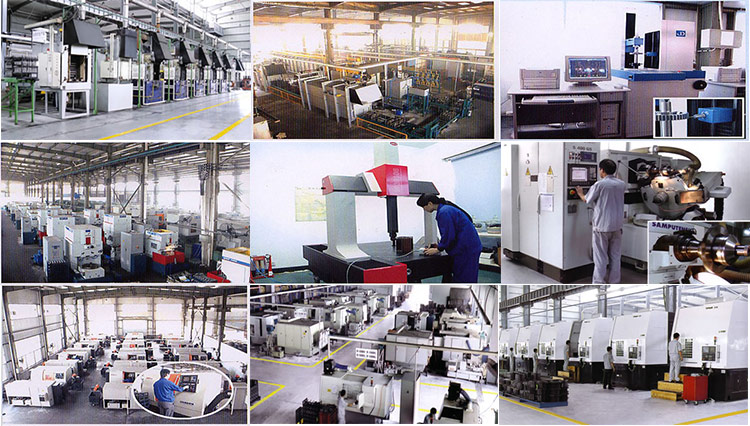
Material integrity is the hallmark of a premium agricultural manufacturer. We utilize 20CrMnTi alloy steel for all gear sets, subjected to a controlled carburizing process that creates a deep, wear-resistant case (HRC 58-62) while preserving a tough, resilient core. The housings are cast from QT500-7 ductile iron, which offers significantly higher tensile strength and impact resistance than standard gray iron. This is especially vital in combined tillage, where the machine may encounter buried rocks or heavy root systems in the Ukrainian “Chernozem.” By isolating the lubrication chambers of each agricultural gearbox, we ensure that a failure in one unit does not contaminate the entire system, allowing for modular maintenance and reducing total machine downtime.
4. Ukraine Field Dynamics: Chernozem Resistance and Regulatory Compliance
Ukraine’s soil mechanics are dominated by the “Chernozem,” which, while nutrient-rich, possesses high cohesion and moisture-retention properties. When performing combined tillage, the Combined Tillage & Multi-Gearbox system must overcome soil resistance that is significantly higher than in the sandy soils of Western Europe. Our field research in the Cherkasy and Sumy regions indicates that the continuous load on the agricultural gearbox can lead to rapid thermal buildup. Consequently, our Ukrainian-spec gearboxes are equipped with “High-Volume” internal oil sumps and external cooling fins to maintain oil viscosity during peak summer operations. Furthermore, all our driveline components are compliant with the Ukrainian DSTU EN ISO 4254-1 safety standards, ensuring that shielding and structural integrity meet the rigorous demands of professional Ukrainian farming enterprises.
Global compliance is equally critical for our agricultural gearbox series. We adhere to the EU Machinery Directive 2006/42/EC, ensuring that our multi-gearbox systems are safe for the operators and the environment. Additionally, we incorporate design features aligned with Brazilian (INMETRO) and Indian (CMVR) regulations, such as non-venting, pressure-compensated caps that prevent environmental contamination from lubricant leakage. This global standard of engineering makes our agricultural gear reducer units the most reliable choice for the international export markets of Ukrainian machinery manufacturers. Whether you are navigating the dry steppes of the South or the humid plains of the North, our multi-gearbox solutions offer the highest level of regulatory safety and mechanical assurance.
5. Market Benchmark: Technical Superiority and OEM Interchangeability
When compared to standard offerings from brands like Comer Industries, Bondioli & Pavesi, or Walterscheid, our Combined Tillage & Multi-Gearbox systems focus on “Dynamic Load Balancing.” While many competitors use lighter housings to reduce shipping costs, we prioritize “Torsional Rigidity” for the Ukrainian market. Our gearboxes feature a 25% higher wall thickness in the mounting flange areas, preventing housing cracks under the massive stresses of wide-format tillage. Our pto gearbox units are designed to be dimensional and performance-matched replacements for machinery from major brands such as Horsch, Bednar, and Pöttinger. We utilize standard ISO-spec bearings and seals, ensuring that replacement parts can be easily sourced through local Ukrainian distribution networks.
Legal Disclaimer: References to brand names like Comer, Bondioli, or Horsch are for technical comparison and compatibility identification purposes only. We are an independent agricultural manufacturer and do not claim affiliation with these trademark holders. Our products are high-performance alternative drivetrain solutions engineered to meet or exceed OEM operational standards.

6. The Engineer’s Journal: Global Perspectives on Multi-Gearbox Reliability
Ukraine (Poltava Region) – 12m Combined Implement Test. During a spring pass on a 12,000-hectare farm near Poltava, the primary pto gearbox was subjected to 400 HP of continuous input. The multi-gearbox system successfully distributed power to six independent rotors. Even when the implement hit a large buried stone, the integrated shear bolt protection in the lateral units prevented damage to the central transmission.
Poland (Wielkopolska) – High-Speed Seedbed Prep. In the vegetable regions of Poland, speed is key. Our agricultural gear reducer with a 1:2.5 ratio provided the necessary high rotor speed for fine soil crumbling. The customer reported a 15% increase in seedbed uniformity compared to their previous single-gearbox implements.
Brazil (Mato Grosso) – Clay Soil Compaction Management. In the heavy clay of Mato Grosso, heat is the primary enemy. Our multi-gearbox system with oversized cooling fins maintained an oil temperature of 82°C despite ambient temperatures of 38°C. The Viton seals showed zero leakage after 1,500 hours of continuous service.
United States (Iowa) – Conservation Tillage Drivetrain. For a large corn grower in Iowa, the ability to handle heavy residue was paramount. The Combined Tillage & Multi-Gearbox allowed for aggressive disc action followed by fine packing. The engineer noted the extremely low noise levels of our spiral bevel gear sets during high-speed operation.
Kazakhstan (Akmola) – Hard Ground Reclamation. Working in the hard-packed steppe of Kazakhstan, the ductile iron housings of our gearboxes resisted the frame-flexing forces that had previously cracked cast iron units from other manufacturers. The toughness of the 20CrMnTi gear core was critical for survival in this environment.
7. Integrated Agricultural Transmission Ecosystem
Maximize your combined tillage performance with our synchronized range of driveline components.
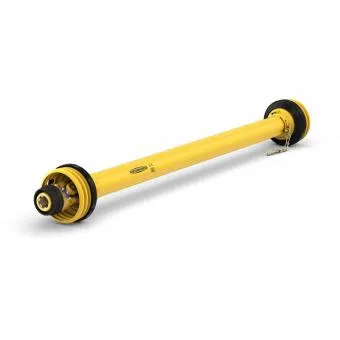
High-Torque PTO Shafts
Heavy-duty PTO shafts with integrated torque limiters and wide-angle joints for wide-format tillage implements.
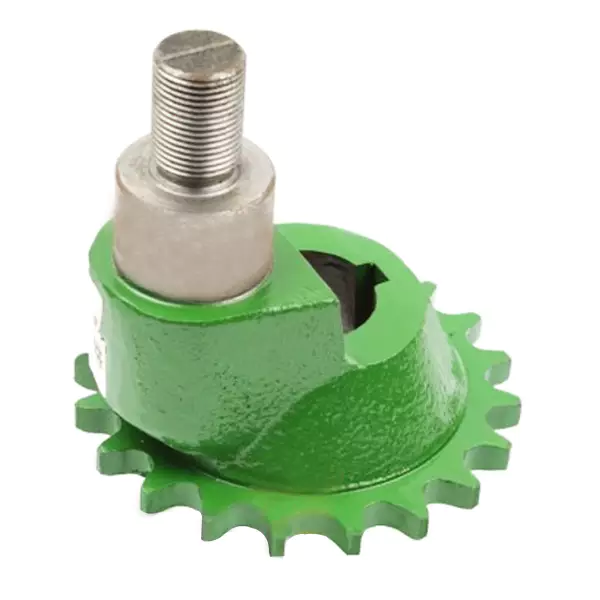
Precision Driveline Parts
Complete sprocket and chain assemblies for auxiliary power distribution in multi-stage machines.
8. Maintenance Alert: When to Replace Your Multi-Gearbox System
The complexity of multi-node systems means that one small failure can escalate quickly. Watch for these five critical signs in your agricultural gear reducer network:
- Differential Heating: If one gearbox in a multi-node system is significantly hotter than the others, it indicates internal bearing fatigue or improper tooth contact.
- Rhythmic Pulsing Noise: A pulsing sound during operation often signifies that the synchronization shafts between gearboxes are misaligned or worn.
- Oil Emulsification in One Node: If a specific agricultural gearbox shows “milky” oil, the seals have failed in that unit, requiring immediate isolation.
- Torque Limiter Frequent Tripping: If the primary pto gearbox limiter trips under normal loads, it suggests internal friction or a seized bearing in the secondary line.
- Input Shaft End-Play: Any lateral movement in the splined shafts indicates that the internal pre-load on the tapered bearings has been lost, leading to gear misalignment.
FAQ
A1. You must verify that the input shaft phasing and the internal gear ratios of all secondary agricultural gearbox units are identical to prevent torsional wind-up.
A2. 20CrMnTi provides the ideal balance of surface hardness for wear resistance and core toughness to prevent tooth breakage when the machine encounters deep obstacles.
A3. We recommend an isolated oil-bath system for each node using synthetic GL-5 85W-140 oil to ensure that any localized wear particles do not spread through the entire drivetrain.
A4. Our specialized engineering team provides heavy-duty agricultural gearbox solutions specifically rated for the high-HP tractor fleets operating in the Ukrainian grain belt.
A5. Ductile iron QT500-7 has superior elongation and impact toughness, which absorbs the shock loads that would otherwise crack standard gray iron housings in high-vibration scenarios.
A6. The thermal limit defines the machine’s ability to dissipate heat; our oversized fins and high oil volume extend this limit to allow for continuous day-and-night operation.
A7. Look for a sticky layer of oil-soaked dust around the shaft before actual leaks occur; this is the signal that the seal lips have been compromised by fine Chernozem particles.
A8. We strictly advise a full oil change for all gearbox nodes after the first 50 hours to remove machining debris and ensure perfect gear mesh for the long term.
A9. A reinforced 8-bolt flange pattern with dowel pins is preferred to maintain perfect alignment between the gearbox housing and the machine’s primary structural frame.
A10. Our B2B technical desk offers full engineering consultancy for “Smart Gearbox” integration, including CAD modeling and performance simulation for large-scale agricultural partners.
Editor: PXY