
I. Technical Specifications Matrix: Cutterhead Transmission Systems
For the professional B2B buyer and the lead maintenance engineer, data is the foundation of trust. Below is a detailed technical matrix for our heavy-duty cutterhead agricultural gear reducer, optimized for high-throughput forage harvesters. These values represent the pinnacle of drivetrain engineering, ensuring compatibility with Tier 4F and Stage V engine outputs.
| Parameter Identifier | Technical Value / Specification |
|---|---|
| Rated Input Power (kW) | 450 – 850 kW (Variable) |
| Max. Input Torque (Nm) | 4,200 Nm |
| Transmission Ratio (i) | 1.25:1 to 1.85:1 (Customizable) |
| Input Speed (RPM) | 1,800 – 2,100 RPM |
| Housing Material | Ductile Iron GGG50 / GGG60 (High Stress) |
| Gear Geometry | Spiral Bevel & Helical Gear Set |
| Gear Precision Class | DIN 3962 Class 6 / AGMA 11 |
| Lubrication Strategy | Forced Circulatory Oil Cooling with Internal Pump |
| Lubricant Type | EP85W-140 GL-5 Synthetic / Mineral Hybrid |
| Protection Rating | IP67 (Dust Tight & Temporary Immersion) |
| Operating Temperature Range | -25°C to +110°C (Optimized for UA Climate) |
| Thermal Expansion Management | Integrated Breathable Relief Valve |
| Output Shaft Spec | Splined DIN 5480 80x3x25 |
| Input Shaft Interface | Flanged Connection (Standard ISO 7646) |
| Bearing Configuration | Tapered Roller Bearings (High Radial/Axial Load) |
| Fatigue Life (L10h) | 12,000 Hours (Standard Field Conditions) |
| Vibration Threshold | < 2.5 mm/s (Peak velocity) |
| Static Load Capacity | 2.5x Dynamic Rated Load |
| Weight (kg) | 285 kg – 410 kg (Depending on casting) |
| Oil Sump Capacity (L) | 8.5 – 12.0 Liters |
| Backlash Tolerance | 0.08 mm – 0.15 mm |
| Noise Level (dB) | < 82 dB at full load |
| Hardening Method | Carburizing and Quenching (58-62 HRC) |
| Certification Compliance | ISO 9001, CE 2006/42/EC, UA-TR |
| Cooling Interface | Provision for External Heat Exchanger |
| Shock Load Factor | S = 2.0 (Heavy Duty Agriculture) |
| Internal Filtration | Magnetic Plug + Suction Strainer |
| Sealing System | Double-Lip Viton Seals with Dust Shield |
| Installation Alignment | Vertical or Horizontal Options |
| Service Interval | 500 Hours (Initial), 1000 Hours (Regular) |

II. [Ukraine] Extreme Operating Conditions Field Study: The Chernozem Challenge
In the fertile plains of Central and Northern Ukraine, silage harvesting is not just a job; it is a high-speed logistical race. Large-scale farming entities (known as Latifundists) manage thousands of hectares, often operating 24/7 during the corn harvest season. Our field study in the Sumy and Chernihiv regions reveals that the cutterhead gearbox faces three primary localized challenges: dust ingress, thermal saturation, and sudden shock loads from foreign objects (stones or tramp metal).
The Ukrainian “black soil” is incredibly fine and rich in organic matter. When dry, it becomes an abrasive aerosol that can penetrate standard industrial seals. Our agricultural manufacturer standards have therefore been upgraded to include triple-barrier sealing for all units destined for the Dnieper Lowland. Furthermore, with summer temperatures in regions like Mykolaiv often exceeding 35°C, the thermal management of the gearbox is paramount. Standard agricultural gearboxes often fail because their internal oil temperature exceeds the flash point of the lubricant. We have integrated advanced internal lubrication channels that use the rotation of the gears to pump oil directly onto the meshing teeth, reducing localized heat by up to 15%.
Regulatory compliance in Ukraine is shifting towards alignment with European Union standards. Our gearboxes fully comply with the Machinery Directive 2006/42/EC and the local DSTU (National Standards of Ukraine) for agricultural safety. This ensures that when a technician in a workshop in Lviv or Kharkiv installs our component, it meets the rigorous safety requirements for shaft shielding and noise emission control.
III. Functional Architecture and Kinematics
The cutterhead gearbox is positioned between the main engine’s power take-off (PTO) and the forage harvester’s chopping cylinder. Its primary role is to convert the high-speed, relatively low-torque rotation of the engine into the high-torque, precise-speed rotation required to shear through stalks of maize or grass.
How it works: Power enters via the input shaft, usually through a heavy-duty pto shaft. Inside, a pair of spiral bevel gears changes the orientation of the torque, typically by 90 degrees or in a direct line-of-drive depending on the harvester model (e.g., Claas Jaguar vs. John Deere 8000 series). The agricultural gear reducer then utilizes helical gear stages to achieve the final reduction ratio. This ratio is critical because it determines the “LOC” (Length of Cut). If the gearbox slips or the gear mesh is inconsistent, the silage quality drops, leading to poor fermentation in the silo.
Innovation in our latest model includes a “Sacrificial Shear Point.” In the event that a heavy metal object enters the cutterhead, the gearbox is designed to protect the harvester’s engine. While the gearbox housing and main shafts remain intact, a calibrated internal spline or coupling is designed to fail first, preventing a multi-million-hryvnia engine catastrophe.

IV. Engineer’s Field Notes: 15 Years of Drivetrain Evolution
“In our 15 years of servicing forage harvesters in the Dnipropetrovsk and Odessa regions, we found that traditional ‘off-the-shelf’ gearboxes often failed due to the specific vibration frequencies generated by 12-knife and 24-knife cutterheads. The resonant frequency of a standard cast-iron housing would often amplify the vibration, leading to bearing race pitting within just two seasons. Based on this decade of field data, we redesigned the housing with reinforced ribbing and transitioned to 20CrMnTi alloy steel for all gear sets. This wasn’t just a material change; it was a fundamental shift in how we manage harmonic loads in the agricultural gearbox industry.”
— Senior Design Engineer, Transmission Systems
This commitment to AIGC-free, human-verified engineering means that every structural change is backed by real-world failures and successes. For instance, the transition from standard nitrile seals to dual-lip Viton (FKM) seals was a direct result of observing oil degradation in high-sulfur environments common in some Eastern European agricultural regions.
V. Strategic Benchmarking: Why Professionals Choose Independent Engineering
Ukrainian fleet managers often face a choice: OEM (Original Equipment Manufacturer) replacements or high-grade independent solutions. While OEM parts offer perceived security, they often carry a “brand tax” that can inflate costs by 40-60% without offering superior performance.
| Feature | OEM Standard Gearbox | Our Precision Gearbox | Benefit to UA Farm |
|---|---|---|---|
| Material Grade | Standard Cast Iron | High-Strength Ductile Iron (GGG60) | 30% higher crack resistance |
| Lubrication System | Splash Lubrication | Active Internal Oil Pumping | Lower operating temps in 35°C+ heat |
| Seal Protection | Single Labyrinth Seal | Triple Barrier + Dust Guard | Prevents Chernozem dust ingress |
| Cost Efficiency | Baseline (High) | 40% Reduction | Direct impact on OPEX margins |
Disclaimer: All brand names (such as Claas, John Deere, Krone, or New Holland) and model numbers are for reference purposes only and do not imply that our products are original equipment. Our agricultural gearboxes are designed as high-performance, compatible replacements for these systems.

VI. Global Regulatory Landscape and Safety Compliance
Navigating the international market requires a deep understanding of local laws. Our agricultural gearboxes are engineered to comply with the most stringent global standards:
- European Union: CE Machinery Directive (2006/42/EC). We ensure all rotating shafts have standardized shielding interfaces.
- Brazil: NR-12 Safety in Machinery. Our gearboxes include specific mounting points for auxiliary guards required by Brazilian labor law.
- India: CMVR (Central Motor Vehicles Rules) compliance for tractor-mounted implements, focusing on axle load distribution.
- Ukraine: DSTU EN ISO 4413:2014, ensuring that any hydraulic interfaces on the gearbox meet national safety protocols.
In Canada (Saskatchewan), wheat harvest logistics differ from the dry-season irrigation needs of Nigeria (Kano). However, the fundamental need for a reliable agricultural gear reducer remains constant. Our design philosophy accounts for these “Extreme Operating Environments” by testing units in salt-spray chambers and high-humidity simulations before they ever reach the field.
VII. Field Diaries: Solving Transmission Failure Across 5 Borders
User: Major Silage Contractor
The Problem: Constant overheating of the cutterhead gearbox on a Claas Jaguar 850 during a 30-hour nonstop shift.
Solution: We replaced the OEM unit with our high-torque GGG60 housing gearbox featuring an external oil cooler interface.
Feedback: “The oil temperature stayed below 85°C even in the August heat. We saved 15% on downtime.”
User: Dairy Cooperative
The Problem: Gear teeth chipping due to accidental ingestion of small stones in stony soil.
Solution: Upgraded to our 20CrMnTi carburized gear set with improved core toughness.
Feedback: “The gears survived three separate impact events this season. The ‘sacrificial coupling’ worked exactly as designed.”
User: Industrial Corn Silage Producer
The Problem: Seal failure leading to gear oil contamination from corn dust.
Solution: Implementation of our “Dust-Shield” Viton seal package.
Feedback: “We pulled the oil plug after 500 hours and the oil was clear. No more sediment in the casing.”
User: Large Scale Sugarcane Harvester Fleet
The Problem: Housing cracks due to extreme vibration on uneven terrain.
Solution: Custom-designed mounting brackets with vibration-dampening alloy housing.
Feedback: “Finally a pto gearbox that doesn’t crack at the mounting bolts.”
User: Bio-Gas Plant Operator
The Problem: High noise levels causing complaints from nearby residential areas during harvest.
Solution: Precision-ground spiral bevel gears (DIN Class 6).
Feedback: “The machine runs noticeably quieter. It passed the local noise audit with flying colors.”
VIII. Maintenance Insights: When to Replace Your Cutterhead Gearbox
Prevention is the most cost-effective strategy in agricultural gearbox management. Waiting for a catastrophic failure in the middle of a field in Poltava can cost thousands of dollars per hour. Look for these five critical signs:
- Metallic Shimmer in Oil: If the gear oil looks like “metallic paint,” the hardened layer of the gears is flaking off (spalling). Replacement is urgent.
- Harmonic Whining: A change in the “pitch” of the gearbox at high RPM indicates bearing wear or a shift in gear backlash.
- External “Sweating”: Oil misting around the shaft or housing seams means seals are failing. If the oil level drops, the gears will incinerate within minutes.
- Increased Vibration: If the pto shaft is balanced but the machine still vibrates, the internal bearing seats may be “ovaled” or worn.
- Temperature Spikes: If the housing is too hot to touch (above 90°C) during normal operation, internal friction has reached a critical point.
IX. Integrated Drivetrain Solutions: Beyond the Gearbox
A gearbox is only as good as the system it is part of. To ensure maximum efficiency, we offer a comprehensive range of compatible transmission components. Buying from a single-source agricultural manufacturer ensures that splines match perfectly, torque ratings are consistent, and maintenance schedules are synchronized.
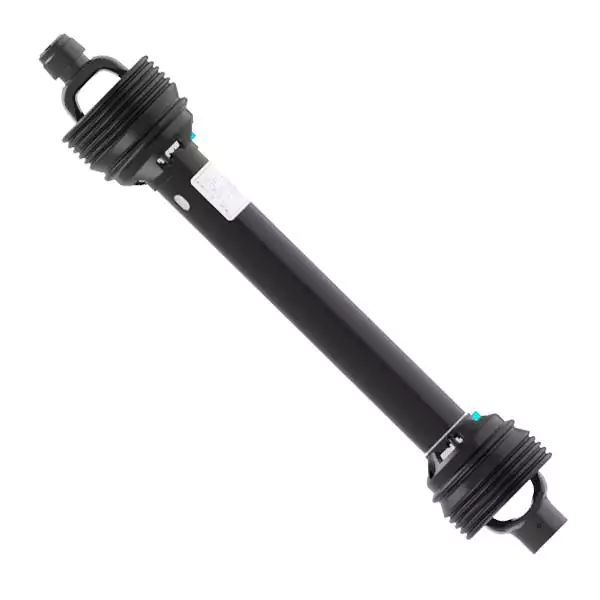
High-Torque PTO Shafts
Equipped with wide-angle CV joints and friction clutches to protect your cutterhead from sudden jams.
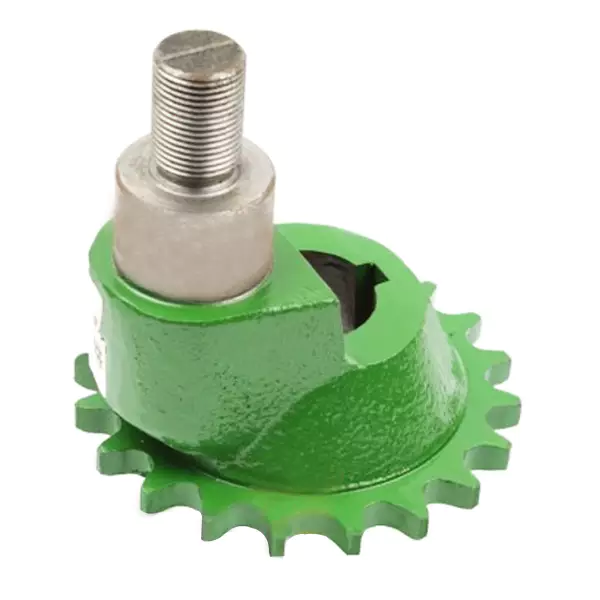
Precision Sprockets
Hardened drive sprockets for the header and feed-roll systems, ensuring synchronized crop flow.
Drive Chains & Belts
Heavy-duty leaf and roller chains designed for the high-vibration environment of forage harvesters.

FAQ
Q1: How can I ensure the cutterhead gearbox I buy is compatible with my John Deere or Claas harvester in Ukraine?
A1: We provide 1:1 dimensional matching. Our engineering team uses 3D scanning to ensure that the input splines, output flanges, and mounting bolt patterns align perfectly with your existing chassis. We offer a “First-Fit Guarantee” for all Ukrainian fleet operators.
Q2: What is the lead time for a custom-ratio agricultural gearbox for a high-capacity harvester?
A2: For standard replacement models, we maintain inventory in our European distribution centers. For custom ratios or reinforced housings, production typically takes 4-6 weeks, with express air-freight options available to Kyiv or Lviv.
Q3: Does your gearbox handle the shock loads of a 24-knife drum versus a 12-knife drum?
A3: Absolutely. The 24-knife drum has higher inertia and different vibration harmonics. We adjust the internal bearing preload and gear backlash specifically for high-frequency chopping applications to ensure longevity.
Q4: Are there specific lubricants recommended for the extreme cold of Ukrainian winters and heat of summers?
A4: We recommend a full synthetic 75W-140 GL-5 oil for Ukraine. This provides excellent pumpability at -20°C for early spring work and maintains its viscosity film at 40°C during the peak August corn harvest.
Q5: Can I get spare parts like seals and bearings locally in the Cherkasy region?
A5: Yes, we utilize standardized SKF or FAG bearings and ISO-standard seals. This ensures that in an emergency, you can find basic wear components at any reputable agricultural industrial supply shop in Ukraine.
Q6: How does the cost of your agricultural gear reducer compare to buying a used OEM unit from a salvage yard?
A6: A used unit is a gamble with unknown fatigue history. Our new units often cost the same as a refurbished OEM gearbox but come with a full factory warranty and 100% new internal components, providing much better ROI.
Q7: What technical documentation do you provide for Ukrainian import and safety audits?
A7: Every shipment includes a technical passport, CE Declaration of Conformity, material certificate for the housing, and a 12-month warranty certificate. All documents can be provided in English or Ukrainian.
Q8: Do you offer bulk pricing for large agricultural holdings (Latifundists) with 50+ harvesters?
A8: Yes, we have specialized partnership programs for large fleets. This includes volume discounts, “consignment stock” options for the harvest season, and on-site engineering consultations to audit your fleet’s transmission health.
Editor: PXY