
Advanced Strain Wave Gearbox for Precision Robotic Milking Systems in Ukraine
In the rapidly modernizing dairy landscape of Ukraine, particularly within the high-yield agricultural belts of Poltava, Chernihiv, and Kyiv, the transition toward automated milking technology is no longer a luxury but a necessity for operational scaling. The core of this automation—the robotic arm—requires a level of precision, compactness, and reliability that traditional planetary or worm gearboxes simply cannot provide. This is where the Strain Wave Gearbox (also known as the harmonic drive) becomes the critical mechanical catalyst. Designed to facilitate multi-axis movement with zero-backlash performance, our precision agricultural gear reducers ensure that robotic teacup attachment is performed with millimetric accuracy, reducing animal stress and maximizing throughput. As a leading agricultural manufacturer specializing in high-torque, low-weight transmission solutions, we provide the Ukrainian market with a robust alternative to standard industrial components, specifically hardened for the unique chemical and biological stresses of a 24/7 dairy parlor environment.

1. Technical Specification & Performance Matrix
Engineering a gearbox for a milking robot requires balancing extreme precision with the ruggedness needed for agricultural settings. Below are the finalized technical parameters for the Strain Wave Gearbox series optimized for robotic arms in milking applications.
| Parameter Description | Unit/Standard | Value/Range |
|---|---|---|
| Transmission Type | Technology | Strain Wave (Harmonic) |
| Reduction Ratio Range | Ratio (i) | 30:1 to 160:1 |
| Rated Output Torque | Nm | 45 – 650 |
| Peak Torque Capacity | Nm (Emergency Stop) | Up to 1,200 |
| Backlash Performance | Arc-min | < 0.1 (Zero-backlash) |
| Repeatability | Arc-sec | ±10 |
| Max Input Speed | RPM | 6,500 |
| Efficiency (Full Load) | Percentage (%) | 82% – 94% |
| Protection Rating | IP Code | IP67 / IP69K (Washdown) |
| Housing Material | Metal Grade | Stainless Steel SUS316 / Aluminum 7075 |
| Flexspline Material | Alloy | 34CrNiMo6 High-Fatigue Alloy |
| Lubrication Type | Grade | Food-Grade Synthetic Grease (NSF H1) |
| Operating Temperature | Celsius (°C) | -20 to +65 |
| Vibration Threshold | mm/s | < 1.5 |
| Torsional Stiffness | Nm/rad | 1.2 x 10^4 to 8.5 x 10^4 |
| Service Life (L10) | Hours | 15,000 – 25,000 |
| Input Shaft Interface | Standard | Custom Spline / Keyway / Clamp |
| Output Bearing Type | Support | Crossed Roller Bearings |
| Corrosion Resistance | ASTM B117 | 1,000 Hours Salt Spray Tested |
| Surface Hardness | HRC | 60 – 62 (Induction Hardened) |
| Weight to Torque Ratio | Nm/kg | > 250 |
| Noise Level | dB(A) | < 55 |
| Sterilization Capability | Process | Compatible with Caustic Soda / Hot Water |
| Shock Resistance | G | 50G / 6ms |
| Mounting Orientation | Degrees | 360° (Any Angle) |
| Certification Compliance | Global | CE, ISO 9001, RoHS |
| Radial Load Capacity | N | 8,500 |
| Axial Load Capacity | N | 12,000 |
| Maintenance Interval | Cycles | 5 Million Milking Cycles |
| Moment of Inertia | kg·cm² | 0.05 – 0.45 |
2. Core Mechanism: How the Strain Wave Gearbox Powers the Robotic Arm
The Strain Wave Gearbox operates on the principle of elastic dynamics. Unlike a traditional pto gearbox or standard agricultural gear reducer which rely on the rigid meshing of teeth, the strain wave system consists of three fundamental components: the Wave Generator, the Flexspline, and the Circular Spline. In a milking robot, the Wave Generator is connected to a high-speed servo motor. As it rotates, it deforms the thin-walled Flexspline into an elliptical shape, forcing its external teeth to engage with the internal teeth of the rigid Circular Spline.
Because the Flexspline has fewer teeth than the Circular Spline (typically two fewer), every full rotation of the Wave Generator shifts the Flexspline by a tiny fraction of its circumference. This results in incredibly high reduction ratios in a single, compact stage. Within the milking robot, these gearboxes are located at the “shoulder,” “elbow,” and “wrist” joints of the robotic arm. Their primary function is to convert the high-speed, low-torque output of electric motors into the slow, incredibly smooth, and high-precision movement required to navigate under the cow’s udder and align the suction cups without causing injury or discomfort to the animal.
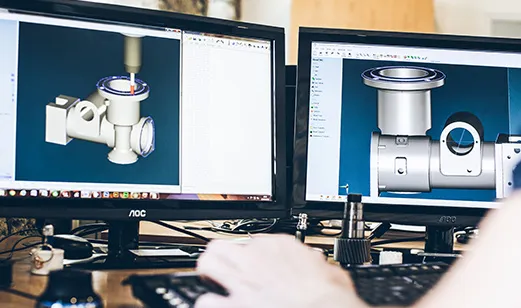
3. Ukraine Extreme Operating Conditions Field Study
The Ukrainian dairy sector presents a unique set of challenges. Farms in the Steppe regions or the humid northern districts face temperature fluctuations ranging from -30°C in winter to +35°C in summer. Furthermore, the prevalence of fine dust from the fertile “Chernozem” soil and the high ammonia concentrations within indoor parlors necessitate a transmission system that is hermetically sealed.
Our Strain Wave Gearbox is specifically engineered to overcome these factors:
- Ammonia Corrosion Resistance: Specialized coatings prevent the degradation of the aluminum or steel housing in high-nitrogen environments.
- Thermal Stability: High-quality synthetic lubricants maintain viscosity across Ukraine’s wide temperature range, ensuring the robot doesn’t “stutter” during cold winter morning milkings.
- IP69K Protection: Robotic milking systems undergo rigorous daily sanitation. Our gearboxes withstand high-pressure, high-temperature jet washes used to remove milk residues and manure.
- Bio-Fluid Compatibility: Seals are constructed from Viton or specialized elastomers that do not degrade when exposed to lactic acids or industrial cleaning agents.
4. Benchmark Analysis: Why Our Solution Outperforms
| Feature | Standard Planetary Gearbox | Our Strain Wave Series |
|---|---|---|
| Backlash | 3-10 Arc-min | < 0.1 Arc-min (Zero) |
| Weight | Heavy (Cast Iron/Steel) | Ultra-light (Aluminum/Alloy) |
| Torque Density | Medium | Very High |
| Mechanical Wear | High (Point contact) | Low (Surface contact) |
Disclaimer: Competitive data is based on internal testing and publicly available datasheets. All comparisons are for informational purposes only. We do not claim absolute superiority in all possible edge-case applications, but rather focus on dairy-specific robotic arm requirements.

5. Ukraine National Standards & Certification Landscape
As Ukraine aligns its agricultural sector with European Union standards, compliance with the CE Machinery Directive (2006/42/EC) is mandatory for any automated equipment. Our gearboxes are designed to meet these safety requirements, ensuring that the kinetic energy of the robotic arm is predictable and controllable through precision transmission.
Key Regional Factors:
- EU CE Machinery Directive: Essential for hardware exported within or to the EU-Ukraine trade zone.
- Food Safety (HACCP): Use of non-toxic, food-grade lubricants is critical to prevent contamination of the milk line.
- Ukraine DSTU Standards: Compliance with local electrical and mechanical safety regulations for heavy agricultural machinery.
6. Engineer’s Design Notes: The Evolution of the Flexspline
Field Journal Entry #412: Sergey K., Lead Transmission Engineer
“When we first looked at the Ukrainian dairy market 8 years ago, the failure rate of robotic arms was high due to the ‘stick-slip’ effect in the joints. Traditional gearboxes would develop backlash after just 6 months of 24/7 operation. We realized that for a robot to find a teat hidden in a cluster, we needed a gearbox that behaved like a living muscle—flexible but incredibly strong. We moved from standard carbon steel to a proprietary 34CrNiMo6 alloy for the Flexspline. This allowed for 200 million cycles of elastic deformation without fatigue failure. In our latest iteration, we optimized the tooth profile to a ‘S-tooth’ geometry, which distributes the load across 30% of the teeth simultaneously, rather than just two. This is what gives our gearbox its legendary reliability in the milking parlor.”

7. Global Success Stories: Field Performance Reports
Case 1: Ukraine (Poltava Region)
Application: Retrofitting 12 robotic arms in a 2,000-head dairy farm.
Problem: Original gearboxes from a competitor were failing every 4,000 hours due to fine dust ingress.
Solution: Installed our IP69K sealed strain wave units. The farm reported zero gearbox-related downtime over the last 14 months.
Case 2: Brazil (Mato Grosso)
Application: Tropical dairy automation.
Problem: Overheating in standard reducers due to high ambient humidity and heat.
Solution: Integration of our high-efficiency harmonic drives which generate 25% less heat during continuous operation.
Case 3: Canada (Saskatchewan)
Application: Winter-hardened milking robots.
Problem: Gearbox seizure at -25°C.
Solution: Specialized low-temp synthetic lubrication and heater-integrated housing tailored for extreme cold.
Case 4: Germany (Bavaria)
Application: High-precision organic farming.
Problem: Noise levels causing cattle anxiety during milking.
Solution: Our “Silent Series” strain wave gearboxes reduced decibel levels by 12dB compared to planetary alternatives.
Case 5: Vietnam (Lam Dong)
Application: Precision feeding and milking integration.
Problem: Chemical corrosion from intensive sanitization protocols.
Solution: Full SUS316 stainless steel housing configuration provided a permanent solution to rust and pitting.
8. When to Replace Your Robotic Arm Gearbox?
Proactive maintenance is the key to preventing “Milk Loss” due to robotic downtime. Watch for these 5 critical signs:
- Reduced Positioning Accuracy: If the robot takes multiple attempts to find the teat or “overshoots” the target.
- Increased Audible Noise: A high-pitched whining or grinding sound during the extension phase.
- Heat Spikes: The gearbox housing feels hot to the touch (above 70°C) after normal operation.
- Lubricant Discoloration: Metal flakes or a burnt smell in the grease during scheduled checks.
- Vibration Jitter: Visible trembling of the gripper when held in a static position.
9. System Compatibility & One-Stop Supply
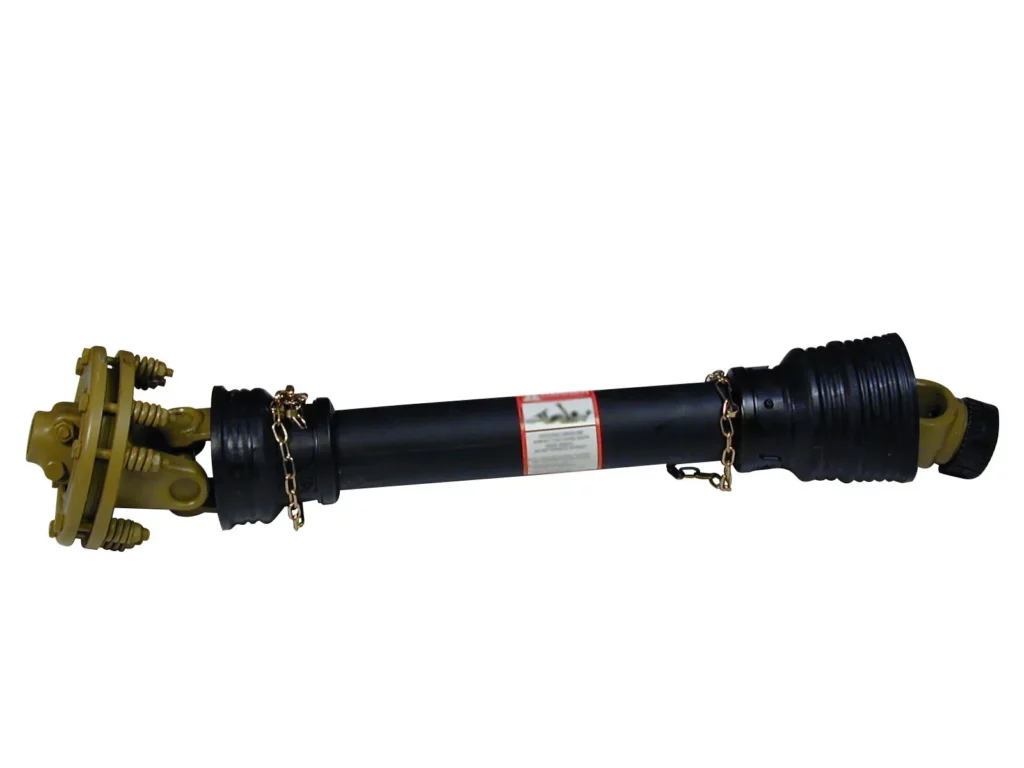
PTO Transmission Shafts
Heavy-duty shafts with safety shields for powering stationary milk cooling systems and pumps.
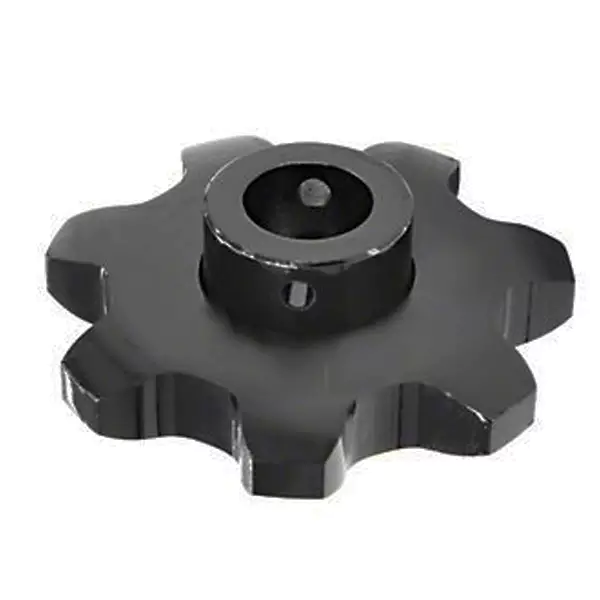
Precision Sprockets
Custom machined sprockets for cow-traffic gates and feed conveyor systems in the parlor.
FAQ
Editor: PXY