
Description du produit
The Pump Drives (Hydraulic pump Drives) is a gearbox allowing the connection between a prime mover (internal combustion engine or electric motor for example) and 1 or more hydraulic pumps. Usually it is used on both stationary and mobile application where mechanical power must be converted into hydraulic power for the purpose of operating travel functions and services.
The hydraulic pumps drives gearboxes consist of a gear drive inside a CHINAMFG housing that connects to a gasoline or diesel engine. The opposite side contains 1 or more standard 2- or 4-bolt flanges for mounting hydraulic pumps. This configuration provides several benefits. For one, 2 or more identical pumps can be connected to provide nearly identical hydraulic output flow from each. Or different sized pumps can be used provide output flow proportional to the displacement of each pump.These gearboxes not only saves space and weight but also eliminates the number of components and reduces assembly time for the whole machinery. Our modular pump drives could allow driving 2 to 4 pumps simultaneously. This not only offers design flexibility, but can boost system efficiency as well.
| Modèle | 2 pumps drive | 3 pumps drive | 4 pumps drive | |||||||
| Parameter | KK190-2N | KK400-2N | KK530-2N | KK700-2N | KK280-3N | KK400-3N | KK530-3N | KK700-3N | KK530-4N | KK700-4N |
| Max. Input power (KW) | 190 | 400 | 530 | 700 | 280 | 400 | 530 | 700 | 530 | 700 |
| Max. Output power per pump pad (KW) | 110 | 210 | 270 | 360 | 150 | 210 | 270 | 360 | 270 | 330 |
| Max. Output torque per pump pad (Nm) | 400 | 900 | 1500 | 1900 | 800 | 900 | 1500 | 1900 | 1500 | 1800 |
| Max. Input speed (RPM) | 2800 | 2600 | 2600 | 2400 | 2800 | 2600 | 2600 | 2400 | 2600 | 2400 |
| Max. Output speed (RPM) | 3200 | 2800 | 2800 | 2700 | 3200 | 2800 | 2800 | 2700 | 2800 | 2700 |
| Transmission ratio | 0.74/0.81/0.89/0.98··· | 0.67/0.74/0.81/0.89/0.98··· | 0.67/0.74/0.81/0.89/0.98··· | 0.67/0.74/0.81/0.89/0.98··· | 0.74/0.81/0.89/0.98··· | 0.67/0.74/0.81/0.89/0.98··· | 0.67/0.74/0.81/0.89/0.98··· | 0.67/0.74/0.81/0.89/0.98··· | 0.67/0.74/0.81/0.89/0.98··· | 0.67/0.74/0.81/0.89/0.98··· |
| Mount size of Prime mover | SAE #3 #4 etc. | SAE #2 #3 etc. | SAE #1 #2 #3 etc. | SAE #0 #1 #2 etc. | SAE #3 #4 etc. | SAE #2 #3 etc. | SAE #1 #2 #3 etc. | SAE #0 #1 #2 etc. | SAE #1 #2 #3 etc. | SAE #1 #2 etc. |
| Port size of Single pump | SAE A,B,C flange etc. | SAE A,B,C,D flange etc. | SAE B,C,D,E flange etc. | SAE C,D,E flange etc. | SAE A,B,C flange etc. | SAE A,B,C,D flange etc. | SAE B,C,D,E flange etc. | SAE C,D,E flange etc. | SAE B,C,D,E flange etc. | SAE B C,D flange etc. |
| Matériau du boîtier | Cast iron | Cast iron | Cast iron | Cast iron | Cast iron | Cast iron | Cast iron | Cast iron | Cast iron | Cast iron |
/* 22 janvier 2571 19:08:37 */!function(){function s(e,r){var a,o={};try{e&&e.split(“,”).forEach(function(e,t){e&&(a=e.match(/(.*?):(.*)$/))&&1
| Application: | Machines, machines agricoles |
|---|---|
| Fonction: | Distribution Power, Speed Changing, Speed Reduction, Speed Increase |
| Installation: | Type horizontal |
| Taper: | Cylindrical Gear Box |
| Nom du produit : | Hydraulic Pump Drive |
| Conditon: | New |
| Exemples : |
US$ 4990/Piece
1 pièce (commande minimale) | |
|---|
| Personnalisation : |
Disponible
| Demande personnalisée |
|---|
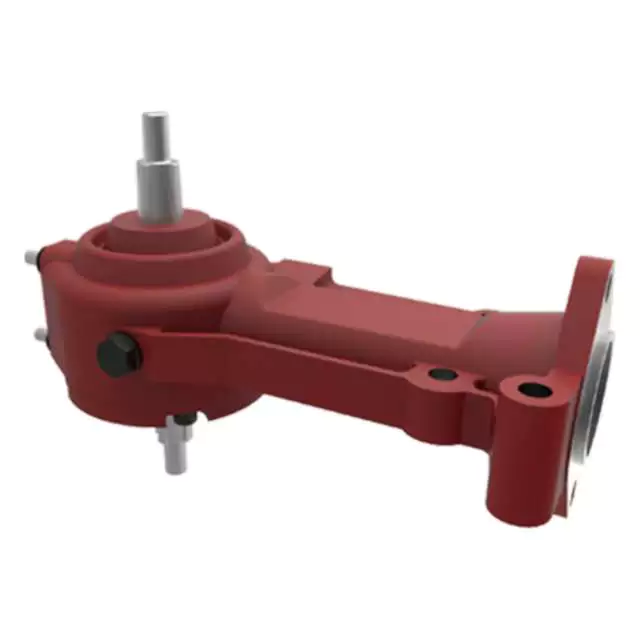
Considerations for Heavy-Duty Farming Gearboxes
Heavy-duty farming applications require robust and reliable gearboxes that can withstand high loads, harsh conditions, and frequent use. Here are the key considerations for selecting gearboxes for heavy-duty farming:
- Load Capacity: Heavy-duty gearboxes must have a high load-carrying capacity to handle the demands of agricultural machinery, such as tillers, plows, and combines.
- Material Durability: Gearboxes should be constructed from durable materials, such as hardened steel or cast iron, that can withstand the stresses and impacts associated with heavy-duty tasks.
- Sealing and Protection: Effective sealing and protection mechanisms, such as robust seals and gaskets, prevent the ingress of dirt, water, and contaminants that can cause premature wear and damage.
- Lubrication System: A reliable and efficient lubrication system is crucial for heavy-duty gearboxes to ensure proper lubrication of components under high loads and temperatures.
- Heat Dissipation: Heavy-duty applications generate significant heat. Gearboxes should have efficient heat dissipation mechanisms, such as cooling fins or oil coolers, to prevent overheating and maintain performance.
- Design and Construction: Gearbox design should incorporate reinforced housing, larger bearings, and robust gears to handle heavy loads without compromising structural integrity.
- Alignment and Mounting: Proper alignment and mounting are essential to ensure smooth and efficient power transmission. Misalignment can lead to increased wear and reduced gearbox lifespan.
- Maintenance Accessibility: Heavy-duty gearboxes should be designed for easy maintenance access. Features such as removable covers and inspection points simplify servicing and repairs.
- Compatibilité: Gearboxes should be compatible with the specific machinery and tasks they will be used for. Customizable gear ratios and output shaft configurations enhance versatility.
- Reliability and Longevity: Heavy-duty gearboxes should be built to last, with quality craftsmanship and components that can withstand the demanding conditions of agricultural operations.
- Safety: Safety features, such as guards and emergency shutdown mechanisms, are essential to protect operators and nearby personnel from potential hazards.
- Environmental Considerations: Gearbox designs should consider environmental regulations and emissions standards to minimize the impact on the environment.
- Cost-Effectiveness: While heavy-duty gearboxes require a higher upfront investment, their durability and performance contribute to long-term cost-effectiveness by reducing downtime and the need for frequent replacements.
By carefully considering these factors, farmers can select the appropriate heavy-duty gearboxes that enhance productivity and reliability in their farming operations.
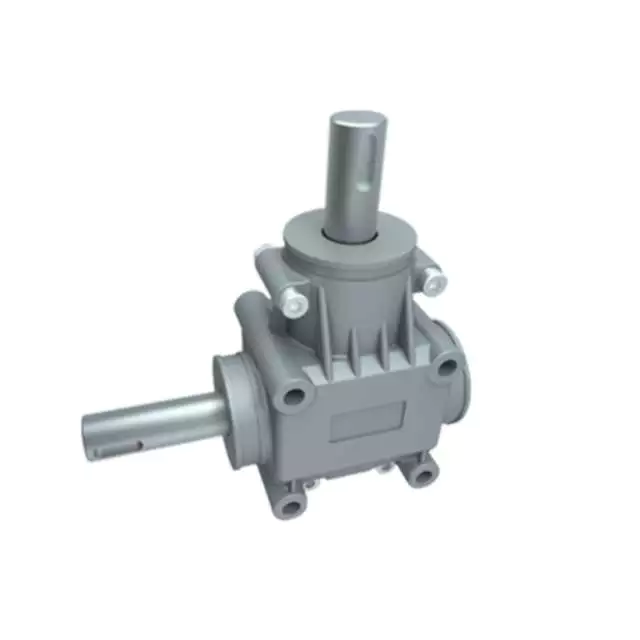
Types de matériel agricole intégrant des boîtes de vitesses agricoles
Les réducteurs agricoles jouent un rôle essentiel dans divers équipements agricoles, améliorant leur efficacité et leur permettant d'accomplir des tâches essentielles. Voici quelques types d'équipements agricoles qui intègrent couramment des réducteurs :
- Tracteurs : Les boîtes de vitesses agricoles sont des composants essentiels des tracteurs, contribuant à la transmission de la puissance du moteur à divers accessoires tels que les charrues, les herses et les faucheuses.
- Moissonneurs : Les moissonneuses-batteuses, utilisées pour récolter des cultures comme les céréales, les fruits et les légumes, utilisent des boîtes de vitesses pour entraîner les systèmes de convoyeurs et les séparateurs, assurant ainsi des opérations de récolte fluides et efficaces.
- Planteuses et semoirs : Les semoirs et les planteuses utilisent des boîtes de vitesses pour distribuer avec précision les semences et les engrais tout en maintenant la profondeur de plantation souhaitée.
- Pulvérisateurs : Les réducteurs agricoles sont utilisés dans les pulvérisateurs pour entraîner les pompes qui répartissent les pesticides, les herbicides et les engrais sur les champs.
- Presses à balles de foin : Les boîtes de vitesses sont essentielles dans les presses à foin pour compacter et former des balles de foin, facilitant ainsi leur stockage et leur transport.
- Épandeurs de fumier : Les épandeurs à fumier intègrent des boîtes de vitesses pour distribuer et répartir uniformément les engrais et le compost sur les champs.
- Vis sans fin à grains : Les vis sans fin à grains, utilisées pour le chargement et le déchargement des grains, sont équipées de réducteurs pour entraîner le mécanisme à vis rotative qui soulève et transfère les grains.
- Cultivateurs : Les cultivateurs utilisent des boîtes de vitesses pour entraîner des dents ou des lames rotatives qui ameublissent et préparent le sol pour les plantations.
- Coupe-bordures rotatifs : Les faucheuses rotatives, souvent fixées aux tracteurs, utilisent des boîtes de vitesses pour actionner les lames rotatives servant à couper les herbes hautes, les mauvaises herbes et les broussailles.
- Batteuses : Les batteuses, utilisées pour séparer les grains de leurs enveloppes ou de leurs tiges, intègrent des boîtes de vitesses pour actionner les mécanismes de battage.
Ces exemples illustrent la diversité des applications des réducteurs agricoles dans une large gamme de matériel agricole. En assurant une transmission et une régulation fiables de la puissance, les réducteurs agricoles contribuent significativement à la productivité et à l'efficacité des pratiques agricoles modernes.
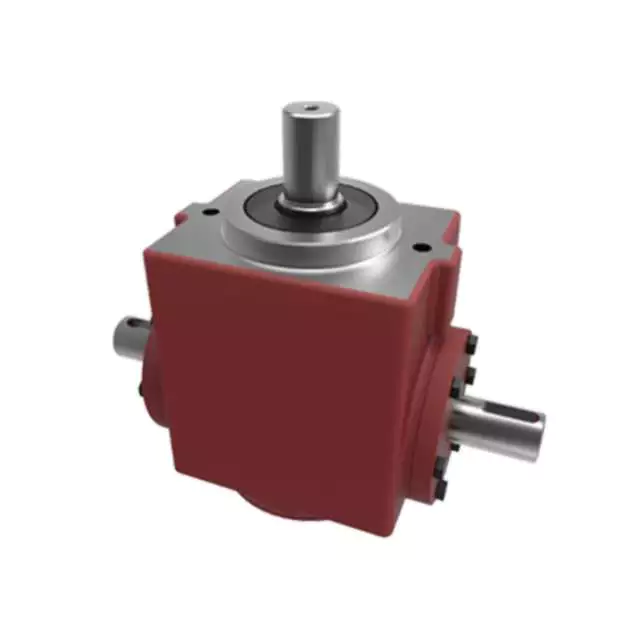
Contribution of Agricultural Gearboxes to Tractor Functionality
An agricultural gearbox is a vital component of a tractor’s powertrain system, playing a pivotal role in enabling the tractor to perform a wide range of tasks on the farm. The functionality of tractors heavily relies on the proper operation of their gearboxes, which facilitate various essential functions:
- Transmission de puissance : Tractors are required to deliver substantial power and torque to perform tasks like plowing, tilling, and hauling. Agricultural gearboxes transmit power from the tractor’s engine to its wheels or other implement attachments, enabling efficient power delivery to the ground.
- Contrôle de la vitesse : Different agricultural tasks demand different speeds. Gearboxes allow operators to control the speed of the tractor to match the requirements of the task at hand. Whether it’s slow-speed operations like tilling or high-speed transport, the gearbox provides the necessary speed adjustments.
- Implement Attachment: Tractors are often used with a variety of implements, such as plows, harrows, and mowers. The gearbox facilitates the connection and operation of these implements by transmitting power and torque from the tractor’s engine to the implement’s working components.
- Directional Changes: Agricultural gearboxes enable tractors to change direction smoothly. They provide the necessary gearing arrangements to reverse the tractor’s movement, making it easy to maneuver around the farm, fields, and obstacles.
- Adaptation to Terrain: Agricultural gearboxes help tractors adapt to different terrains and soil conditions. By adjusting the gear ratio, tractors can optimize their performance for tasks like climbing slopes, working on uneven ground, or pulling heavy loads.
Modern agricultural gearboxes are designed for durability and reliability in the demanding farming environment. They are often equipped with features like multiple gears, synchronization mechanisms, and efficient lubrication systems to enhance their performance and longevity.
Regular maintenance and periodic checks are essential to keep the agricultural gearbox in optimal condition. Proper lubrication, gear inspection, and addressing any signs of wear or damage contribute to the longevity and consistent performance of the gearbox, thus ensuring the tractor’s functionality throughout the farming seasons.


editor by CX 2024-04-16