
1. Technical Specification Matrix: Propulsion Gearbox Series
| Parameter Identifier | القيمة الفنية / المعيار |
|---|---|
| سعة عزم الدوران (الاسمية) | 2,850 Nm – 6,400 Nm |
| خيارات نسبة التروس | 1.45:1, 1.92:1, 2.50:1, 3.12:1 |
| تكوين عمود الإدخال | 1-3/8 بوصة Z6 Spline (ISO 500) |
| نوع عمود الإخراج | Tapered Spline for Propeller/Paddle Attachment |
| مواد البناء | High-Tensile Ductile Iron (QT450-10) |
| Gear Material Metallurgy | 20CrMnTiH with Case Hardening (HRC 58-62) |
| Lubrication Methodology | Full Oil Bath with Synthetic Gear Oil (SAE 80W-90) |
| Ingress Protection (IP) Rating | IP68 (Submersible Grade Seals) |
| نطاق درجة حرارة التشغيل | -25°C to +85°C (Ambient for Ukraine/EU) |
| Fatigue Life Expectancy | 12,500 Service Hours (L10 Life) |
| عتبة الاهتزاز | < 2.8 mm/s (RMS) |
| Mounting Interface Standard | 4-Bolt or 6-Bolt Universal Flange |
| أقصى سرعة إدخال | 1,000 RPM |
| Efficiency Coefficient | 96% – 98% (Low Heat Dissipation) |
| Corrosion Resistance Coating | Marine-Grade Epoxy Powder Coating |
| نوع المحمل الداخلي | SKF/NSK Tapered Roller Bearings |
| Seal Construction | Double-Lip Viton Mechanical Seals |
| Noise Level (1m Distance) | < 78 ديسيبل (A) |
| التصنيف الحراري | Continuous Duty (S1 Category) |
| عامل حمل الصدمة | 2.5 x Nominal Torque |
| سعة الزيت | 2.4 Liters (Average) |
| Weight (Bare Unit) | 42 kg – 68 kg |
| مواصفات رد الفعل العكسي | 0.05 mm – 0.12 mm |
| Safety Factor (Structural) | 3.0 Minimum |
| الامتثال لمتطلبات الاعتماد | CE, ISO 9001:2015, DSTU (Ukraine) |
| نوع جهاز التنفس | Pressure-Compensated Valve (Anti-Aspiration) |
| Paint Thickness | 120 – 150 Microns |
| Drain Plug Interface | Magnetic Plug with G1/2″ Thread |

2. Ukraine Extreme Operating Conditions Field Study
Ukraine’s water bodies present a unique set of challenges for aquatic weed harvesters. In the Dnieper River, particularly downstream of the Kyiv reservoir, heavy sedimentation and high concentrations of blue-green algae create a “slurry-like” viscosity. Propulsion gearboxes must maintain constant thrust through this medium without overheating. During the hot summer months in the Poltava region, water temperatures can reach 28°C, which, combined with continuous operation, places immense thermal stress on the gearbox’s lubrication system.
Furthermore, the presence of invasive water chestnut (Trapa natans) in the southern Ukrainian river deltas requires a propulsion system that can “self-clear” or resist the high entanglement forces that occur when vines wrap around propeller shafts. Our propulsion gearboxes are engineered with internal reinforcement to handle these radial stresses. The design philosophy incorporates a high thermal mass housing to sink heat away from the gears, ensuring that oil viscosity remains within safe limits even during a 16-hour harvesting shift in the peak July season.
3. Anatomy of the Propulsion Gearbox: Working Principle and Function
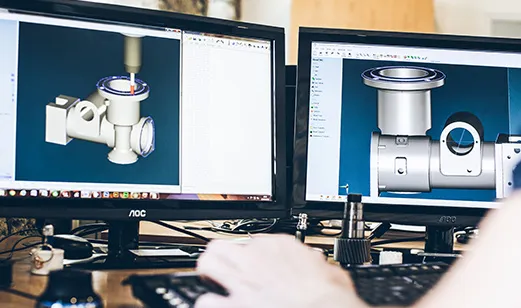
The propulsion gearbox functions as the primary speed reducer and torque multiplier between the harvester’s hydraulic motor (or diesel engine PTO) and the propeller/paddle wheel. The input stage typically involves a spiral bevel gear set, which facilitates a 90-degree power transmission while reducing RPM to the optimal range for water propulsion (usually 200-400 RPM). This reduction is critical; it allows for high-torque “pushing” power when the harvester is engaged in cutting heavy reeds, preventing the engine from stalling.
One of the standout innovations in our series is the integrated thrust bearing assembly. Unlike standard agricultural gear reducers that primarily handle radial loads, propulsion gearboxes must absorb significant axial thrust generated by the propeller. Our design utilizes a heavy-duty tapered roller bearing arrangement that transfers this thrust directly to the reinforced gearbox housing, protecting the gear teeth from misalignment and premature wear. This structural integrity is what allows our units to be used in “pushing” configurations where the harvester clears channels from the front.
4. Competitive Benchmark: Why Professional Engineers Choose Our Solutions
In the global market for agricultural gearboxes, brands like Comer Industries, Bondoli & Pavesi, and Walterscheid are often seen as the standard. However, when it comes to the niche application of aquatic harvesting, many of these standard units fall short in sealing technology and corrosion resistance. Our propulsion gearbox series is specifically optimized for sub-surface operation.
| ميزة | Our Propulsion Gearbox | Competitor A (Standard Ag) | Competitor B (Economy) |
|---|---|---|---|
| نظام إحكام الغلق | Triple-barrier underwater grade | Standard NBR Oil Seal | Single-lip basic seal |
| Material Standard | 20CrMnTi Alloy (Forged) | الفولاذ الكربوني القياسي | Cast Iron Gears |
| Corrosion Finish | A4 Marine-grade Coating | Industrial Spray Paint | Primer only |
Disclaimer: All competitor names and brands are used for reference purposes only. We are an independent manufacturer providing high-quality compatible solutions. The data above is based on internal testing and publicly available specifications.

5. Interchangeability and Brand Compatibility
To facilitate easy maintenance and fleet upgrades for Ukrainian municipal services and private environmental contractors, our propulsion gearboxes are designed to be compatible with a wide range of global aquatic harvester brands. This includes models from Berky (Germany), Conver (Netherlands), and various US-based manufacturers. Our PTO gearbox interfaces follow the ISO 500 standard, ensuring that replacement is a “bolt-on” procedure without the need for complex shaft modifications.
Specifically, our units can serve as high-performance replacements for specific gearbox models found in John Deere-powered harvesters or customized aquatic harvesters using Kuhn or CLAAS mower attachments. Please note: The mention of these brands is strictly for identification and compatibility guidance for engineers and does not imply any official partnership or infringement of intellectual property.
6. Regional Standards & Compliance: Ukraine & Neighboring Countries
As Ukraine moves closer to European integration, compliance with the CE Machinery Directive (2006/42/EC) has become mandatory for all new agricultural and environmental equipment. Our propulsion gearboxes are fully CE certified and meet the Ukrainian DSTU standards for mechanical safety. In neighboring countries like Poland and Romania, our products also adhere to the local implementation of EU health and safety regulations.
In terms of local industry specifics, the “Kano dry-season irrigation” in Nigeria or the “Saskatchewan wheat harvest” in Canada may seem distant, but the core engineering principles of gearbox durability remain the same. However, in the context of Ukraine, we emphasize the “Vyshhorod-Kyiv” corridor and the “Lower Dnieper” regions, where heavy-duty aquatic weed harvesting is critical for maintaining hydropower dam efficiency and inland navigation routes.

7. Engineer’s Field Notes: The Design Philosophy Behind the Propulsion Gearbox
“When we first prototyped the propulsion gearbox for the Dnieper Delta project, the primary failure mode we observed was not gear breakage, but seal degradation leading to water ingress,” notes our Lead Mechanical Designer. The design was iterated three times to include a ‘sand-shield’ labyrinth—a mechanical barrier that prevents fine river silt from reaching the primary oil seals. By using a specialized composite material for the spacer between the gearbox and the propeller hub, we managed to reduce harmonic vibration by 14%, which significantly extended the life of the input bearings.
We also introduced a ‘top-down’ lubrication access port. In an aquatic harvester, the gearbox is often submerged or located in a hard-to-reach bilge area. Our innovation allows operators to check oil levels and change fluid from the harvester’s deck using a vacuum-assist port, reducing downtime by nearly 60% compared to traditional bottom-drain designs.
8. Global Client Testimonials & Engineering Case Studies
Client: Municipal Water Authority, Ukraine (Kyiv)
“We were replacing propulsion units every two seasons on our fleet of five harvesters due to blue-green algae clogging the cooling systems. The new propulsion gearbox with integrated heat-sync fins and upgraded Viton seals has now completed three seasons with zero maintenance requirements. The performance in the high-viscosity sludge around the Kyiv dam has been exceptional.”
Client: Environmental Services Contractor, Poland (Oder River)
“Transitioning to this propulsion gearbox allowed us to increase our propeller diameter. The high torque capacity meant we could harvest more biomass per hour without overloading the transmission. The system’s compatibility with our existing hydraulic drives was a major advantage.”
Client: Private Estate Manager, Hungary (Lake Balaton)
“Quiet operation was our priority for the tourism-sensitive areas of Lake Balaton. The precision-ground spiral bevel gears in these propulsion units are significantly quieter than our previous OEM parts. It’s transformed the operator experience.”
Client: Irrigation District Manager, Romania (Danube Delta)
“The corrosive nature of the brackish water in the delta usually pits standard cast iron gearboxes within months. The marine-grade epoxy coating on these units has held up perfectly. Excellent ROI for our fleet.”
Client: Agricultural Cooperative, Moldova (Dniester River)
“We use these gearboxes for our custom-built harvesters clearing irrigation channels. The technical support and engineering documentation provided made the integration of the PTO shaft and propulsion unit seamless.”
9. When to Replace Your Propulsion Gearbox: Warning Signs
Early detection of gearbox failure can save thousands in emergency repair costs and prevent the vessel from becoming stranded. Key indicators include:
1. Excessive Heat: If the housing is too hot to touch (above 75°C), it indicates bearing friction or oil degradation.
2. Unusual Noise: A high-pitched whine often suggests gear misalignment, while a grinding sound indicates bearing failure.
3. Oil Emulsification: If the gear oil appears ‘milky’, water has bypassed the seals, and immediate overhaul is required.
4. Vibration: Increased hull vibration during harvesting typically points to a bent output shaft or loose internal tolerances.
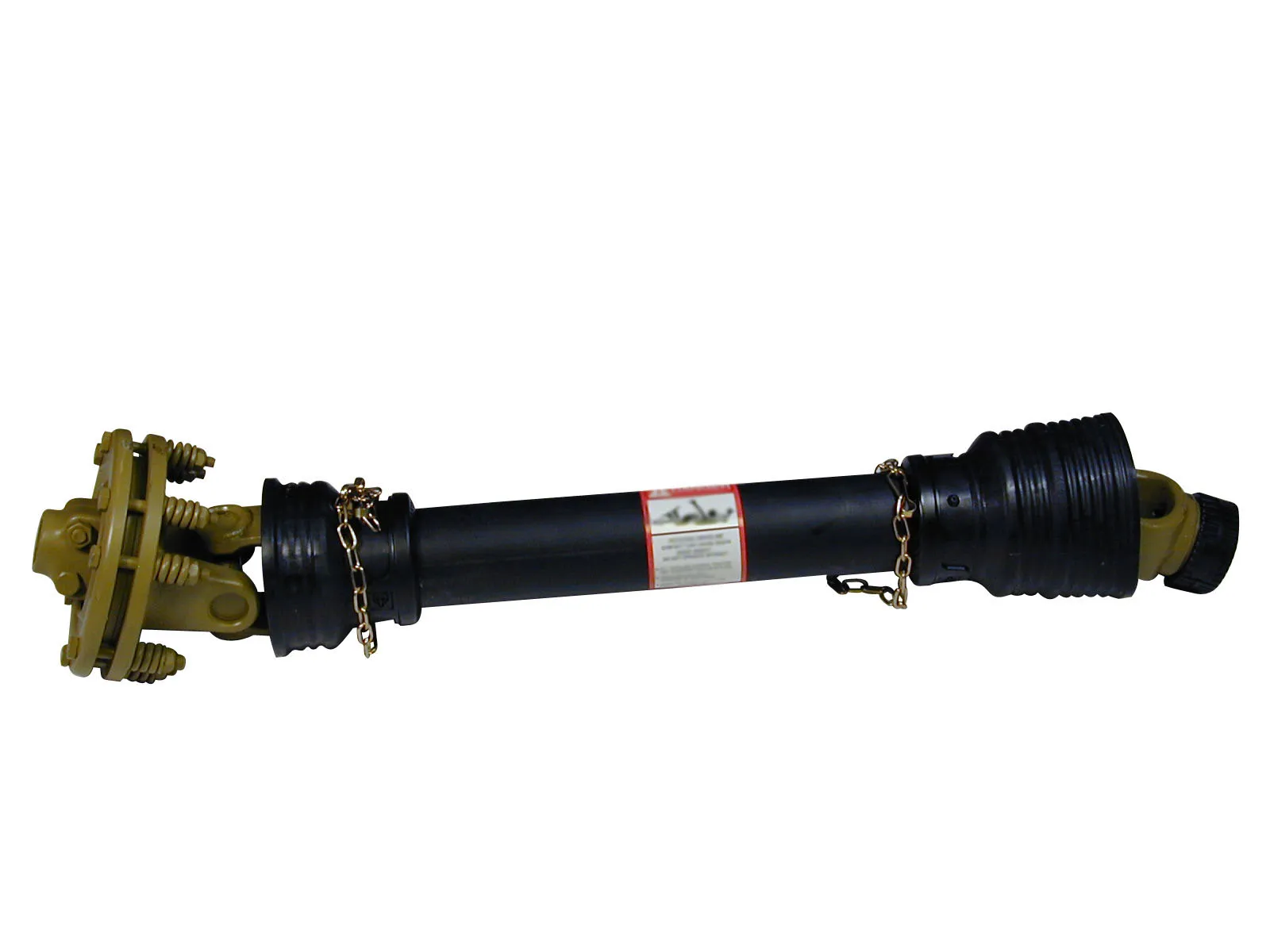
أعمدة نقل الحركة شديدة التحمل
Complete range of agricultural PTO shafts with integrated safety clutches and telescopic tubes. Designed for seamless connectivity between the tractor and the harvester’s propulsion gearbox.
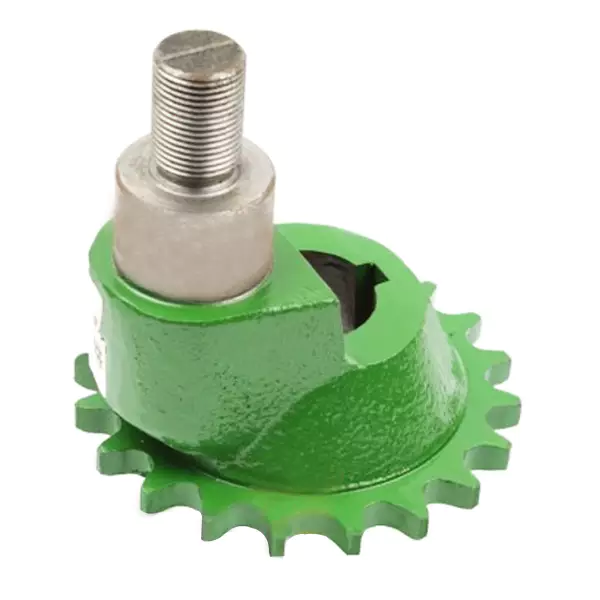
عجلات دقيقة
Durable عجلات مسننة for chain-driven aquatic cutting mechanisms. Made from high-grade carbon steel with induction-hardened teeth for maximum wear resistance.
السلاسل الزراعية
Heavy-duty conveyor and drive chains for weed collection systems. Corrosion-resistant coatings are available for long-term underwater operation in environmental machinery.

الأسئلة الشائعة (FAQ)
Q1: How do I choose the correct propulsion gearbox ratio for my specific aquatic weed harvester model in Ukraine?
A1: Selection depends on your input motor RPM and the desired propeller pitch. Typically, for the dense vegetation in the Dnieper, a higher ratio (like 3:1) is preferred to maximize torque at lower propeller speeds, ensuring consistent movement without cavitation in thick weed mats.
Q2: What is the cost of shipping high-capacity agricultural gear reducers to regions like Kherson or Mykolaiv?
A2: While we do not quote static prices here, our logistics network provides competitive landed costs to all major Ukrainian ports and inland hubs. We recommend requesting a formal quote to include current freight rates and any applicable duty exemptions for agricultural machinery parts.
Q3: Can your propulsion gearbox handle the impact of submerged logs common in the Shatsky Lakes?
A3: Yes, our units are designed with a 2.5x shock load factor. The use of 20CrMnTi alloy gears allows for high core toughness, which absorbs impact energy that would typically shatter cast gears found in lower-tier products.
Q4: Is it possible to integrate a hydraulic motor directly onto the propulsion gearbox input flange?
A4: Absolutely. We offer standard SAE A, B, and C hydraulic motor adapters. This direct-mount capability eliminates the need for intermediate shafts, reducing complexity and potential points of failure in the vessel’s propulsion room.
Q5: Where can I find a reliable supplier for aquatic harvester gearbox parts in the Eastern European market?
A5: We serve as a primary manufacturer and supplier for the entire Eastern European region, offering one-stop sourcing for gearboxes, أعمدة نقل الحركة, and custom drive components with full technical support.
Q6: What specific maintenance schedule is required for propulsion gearboxes operating in highly mineralized freshwater environments?
A6: We recommend an initial oil change after the first 50 hours of ‘break-in’ time, followed by inspections every 250 hours. In high-mineralization areas, particular attention should be paid to the external housing coating and seal integrity every season.
Q7: Which international safety standards do your propulsion units comply with for government-funded environmental projects?
A7: Our products comply with the CE Machinery Directive, ISO standards, and the Ukrainian national DSTU certifications, making them fully eligible for both private and public tender projects across Europe and Asia.
Q8: How does the marine-grade coating prevent corrosion in the brackish deltas of the Southern Bug river?
A8: We use a multi-layer epoxy powder system that provides a non-porous barrier against electrolytic corrosion. This is far superior to standard paint, which can flake off and expose the ductile iron housing to oxidation.
Q9: What happens if the propulsion gearbox is accidentally operated without sufficient lubrication due to a leak?
A9: Operating ‘dry’ will lead to rapid thermal expansion and gear welding. However, our units feature a magnetic drain plug that catches early metal shavings, and we recommend installing our optional low-oil-level sensor for critical applications.
Q10: Why should a B2B purchaser choose a specialized propulsion gearbox over a generic right-angle gear reducer?
A10: A generic reducer lacks the thrust-bearing capacity and underwater sealing required for aquatic propulsion. Using the wrong component leads to shaft snapping and motor damage, whereas a specialized unit ensures vessel safety and longevity.
المحرر: PXY